
There was a time, not too long ago, when my alarm clock was my worst enemy.
It would go off at 6:30 AM, a harsh, blaring sound that immediately sent my nervous system into a state of panic. My first instinct, without even opening my eyes fully, was to reach blindly for my nightstand. My hand would fumble around until I felt the cold metal of my phone.
I would pull it under the covers, squinting against the blinding brightness of the screen, and turn off the alarm. And then, the trap would snap shut.
I would open social media. Just for a minute, I told myself. Just to wake my brain up.
Forty-five minutes later, I would emerge from my bed, my head throbbing with information overload. I hadn’t even brushed my teeth yet, but I had already consumed the political opinions of strangers, seen ten pictures of a friend’s vacation to Italy, and watched a dog rescue video that made me want to cry.
Before my feet even hit the floor, I felt exhausted. I was starting my day entirely on the defensive, reacting to the world instead of acting on my own terms. My daily routine wasn’t a routine at all; it was just a series of accidental events happening to me.
The Myth of the “Billionaire Morning”
I knew things had to change. Like anyone desperate for a quick fix, I turned to the internet for answers.
I started consuming content about productivity and wellness. I fell deep into the rabbit hole of the “perfect morning routine.” You know the ones I am talking about. The videos where someone wakes up at 4:30 AM, drinks a gallon of lemon water, does a grueling hour of CrossFit, meditates for thirty minutes in absolute silence, writes three pages in a gratitude journal, and reads a chapter of a philosophy book, all before the sun even rises.
I tried it. Oh, how I tried it.
I wrote out a massively ambitious schedule on a whiteboard in my kitchen. For exactly three days, I forced myself out of bed in the pitch black. I tried to meditate, but my mind was screaming about how tired I was. I tried to journal, but I just wrote “I want to go back to sleep” over and over again.
By Thursday, I crashed. I slept through my alarm, skipped the entire routine, and felt a crushing sense of failure.
I realized that relying on sheer willpower to completely overhaul your life overnight is a recipe for disaster. Willpower is like a battery; it drains quickly when you force yourself to do things you hate.
I needed a different approach. I didn’t need to become a completely different person by tomorrow. I just needed a system to help me make slightly better choices today. It was during this period of trial and error that I started experimenting with different digital tools, eventually documenting my findings in my guide on How I Built a Better Morning Routine Using My Phone.
But there was one specific app I found during that time that completely changed my paradigm.
Discovering the Science of Small Steps
The app is called Routinery.
When I first downloaded it, I was expecting another generic habit tracker. I thought it would just give me a blank list with checkboxes where I could write “Meditate” and “Exercise,” leaving the actual execution entirely up to me.
Instead, the onboarding process was surprisingly gentle. It didn’t ask me for my grand life goals. It didn’t ask me if I wanted to run a marathon or write a novel.
It simply asked me: “What is one tiny thing you want to do right after you wake up?”
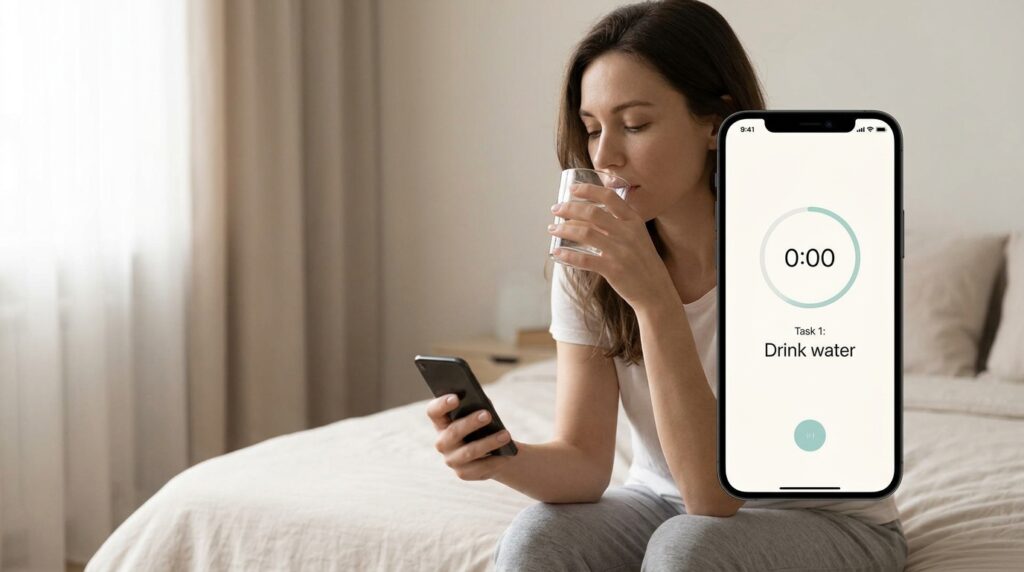
It suggested drinking a glass of water. Just one glass.
I set that as my first “routine.” The app uses the psychological concept of habit stacking, a method where you take a tiny, new behavior and attach it to a behavior you already do naturally. I already woke up every day. That was the trigger. The new behavior was drinking water.
The next morning, my alarm went off. Instead of the usual panic, I opened Routinery.
The screen was beautifully minimalist. A large, calming circle appeared on the screen, acting as a visual timer. It told me I had two minutes to drink a glass of water.
There was something incredibly soothing about not having to think. I didn’t have to negotiate with myself. The app was simply holding space for me to do one easy thing. I walked to the kitchen, drank the water, and tapped the screen to complete the task.
A little chime played. It was a tiny hit of dopamine. A tiny victory before 7:00 AM.
Building the Sequence
Over the next few weeks, I slowly—very slowly—added to that morning sequence.
The brilliance of this app is that it functions like a gentle metronome for your life. It isn’t just a list; it is an active, running timer that guides you from one activity to the next without giving you time to get distracted.
After I mastered the glass of water, I added “Open the blinds.” One minute. Then, I added “Make the bed.” Three minutes. Then, “Make coffee.” Five minutes.
My morning routine wasn’t a grueling hour of self-improvement. It was a fifteen-minute sequence of incredibly mundane tasks. But here is the secret: doing those mundane tasks in a specific, unbroken order completely changed my brain chemistry for the rest of the day.
When the app’s timer is running, I am not allowed to check my email. I am not allowed to open Instagram. I am simply following the sequence.
By the time my fifteen-minute timer finishes and my coffee is ready, I have already completed four tasks. I have built momentum. The house is slightly cleaner, the sunlight is in the room, and I am hydrated. I feel a sense of agency and control. I am no longer a victim of the morning; I am the architect of it.
I’ve explored the mechanics of this kind of behavior change extensively when reviewing 8 Apps That Helped Me Build Better Habits, but experiencing it firsthand was entirely different. It felt like I had hired a personal assistant whose only job was to gently tap me on the shoulder and say, “Okay, what’s next?”
Conquering the Afternoon Slump
Once I realized how effective this system was for my mornings, I started looking at the rest of my day.
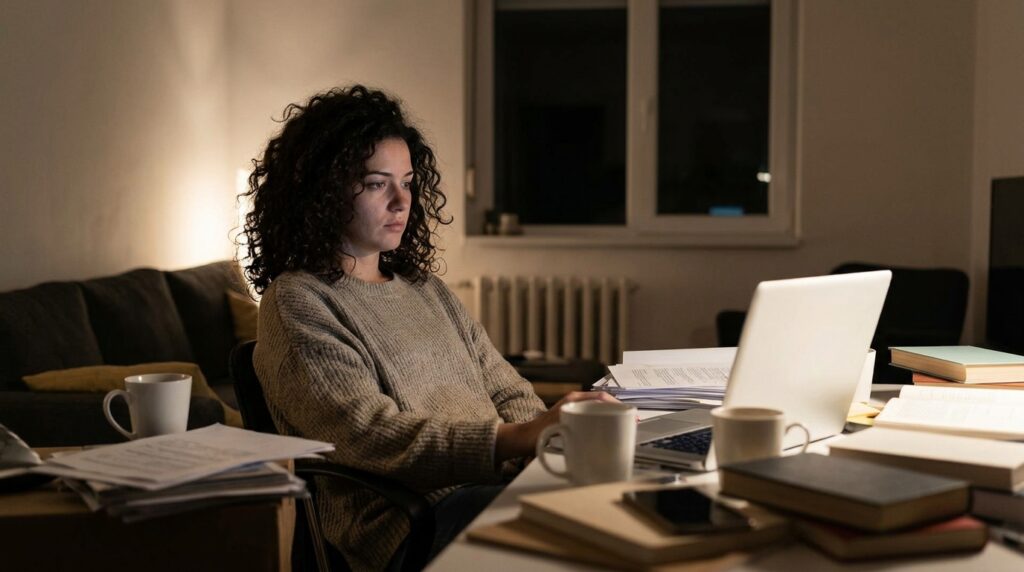
For years, I had struggled with the dreaded 3:00 PM crash. I work from home, and by mid-afternoon, my focus would completely evaporate. I would stare at my laptop screen, my eyes glazed over, unable to write a single coherent sentence. I would usually cope by wandering into the kitchen, eating unhealthy snacks, and scrolling through my phone, effectively wasting the last two hours of my workday.
I realized I didn’t lack energy; I lacked a transition.
My brain was exhausted from being in “work mode” for six hours straight. I needed a way to cleanly break up the day. So, I created an “Afternoon Reset” sequence in the app.
Now, at exactly 3:00 PM, an alarm goes off. I close my laptop immediately.
I open the app, and my sequence begins. Five minutes to step outside onto my balcony and look at something far away, giving my eyes a break from the screen. Five minutes to do a very simple stretching routine to get the blood flowing back into my legs. Ten minutes to make a cup of green tea and sit in silence.
It takes exactly twenty minutes. But those twenty minutes are non-negotiable.
When I sit back down at my desk at 3:20 PM, it feels like a brand new day has started. The brain fog is gone. I have successfully bypassed the afternoon slump entirely by simply giving my brain a structured, intentional pause.
This specific strategy became a cornerstone of my professional life, something I elaborate on further in my piece about How I Stay Focused During Long Workdays With Apps. A lifestyle app doesn’t just change your personal life; it bleeds into your professional output, making you sharper and more resilient.
The Magic of the Wind-Down Routine
The final frontier for me was sleep.
Just like my mornings used to be chaotic, my evenings were a mess. I would work late, watch television until my eyes burned, and then drag myself to bed, expecting to fall asleep immediately.
Of course, that never happened. My mind would race. I would lay in the dark, stressed about the emails I needed to send the next day. I realized that just as you need a routine to wake up, you desperately need a routine to shut down.
I created my “Evening Wind-Down” sequence.
At 9:30 PM, the sequence starts. The first task is simply “Turn off all overhead lights and turn on the lamps.” This signals to my brain that the day is ending. Then, “Wash face and brush teeth.” Next is the most important one: “Put phone on the charger in the living room.”
This was the hardest habit to build, but the app held me accountable. By putting my phone in another room, I removed the temptation to doomscroll in bed.
The final task in the sequence is “Read a physical book for twenty minutes.”
By the time that final timer goes off, my eyelids are heavy. The ambient lighting, the lack of blue light from screens, and the quiet activity of reading signal to my body that it is safe to rest.
I used to suffer from terrible insomnia. Now, I fall asleep within minutes of turning off my bedside lamp.
The Freedom of Automation
When I tell people about my daily app-guided routines, they sometimes look at me with concern.
“Doesn’t that feel robotic?” they ask. “Aren’t you just living your life according to a timer? Where is the spontaneity?”
It is a fair question, but my experience has been the exact opposite.
Before I used this lifestyle app, my life felt incredibly chaotic. I was constantly experiencing decision fatigue. Every single morning I had to wake up and make twenty different choices. Do I make coffee first? Do I shower now or later? Should I check my email?
Making all those tiny, insignificant decisions drains your mental energy. By the time I actually sat down to do my creative work, my brain was already exhausted.
By automating the mundane parts of my day—my morning hydration, my afternoon stretches, my evening wind-down—I have entirely eliminated decision fatigue from those areas of my life.
I don’t have to think about my morning anymore; I just execute it.
And because I am not wasting mental energy deciding when to brush my teeth or when to step away from my desk, I have infinitely more energy, creativity, and spontaneity for the things that actually matter.
I have more patience with my partner. I have more focus for my writing. I have more presence when I am spending time with my friends.

Final Thoughts on Designing Your Day
We only have a limited amount of time on this earth, and how we spend our days is, ultimately, how we spend our lives.
For years, I was letting my phone dictate my schedule. I was letting social media algorithms decide what my first thought of the morning would be. I was living in a constant state of reaction.
Using a lifestyle app to physically structure my routines wasn’t about becoming a hyper-productive machine. It wasn’t about trying to be perfect.
It was an act of self-care. It was a way of building an environment that protected my peace of mind.
If you find yourself waking up exhausted, if you feel like your days are slipping through your fingers, I highly recommend looking into a tool that helps you build micro-habits. Don’t try to change your entire life by tomorrow. Don’t try to wake up three hours earlier and run ten miles.
Start ridiculously small. Use an app to remind you to drink one glass of water. Use an app to remind you to step away from your desk for five minutes.
String enough of those tiny, positive moments together, and eventually, you will turn around and realize you have completely transformed the way you live. You might just find that the secret to a better life wasn’t a massive overhaul at all; it was just a matter of getting your daily sequence right.
