
We have all experienced the uniquely uncomfortable environment of a standard doctor’s office.
You sit on an exam table covered in crinkly paper, wearing a gown that doesn’t quite fit, shivering slightly in the heavily air-conditioned room. You’ve been waiting for forty-five minutes past your scheduled appointment time. Finally, there is a quick knock on the door. Your doctor rushes in, holding a laptop, eyes already scanning a chart.
They sit down, look up, and ask the impossible question: “So, how have you been feeling since your last physical a year ago?”
My mind would always go entirely blank.
How had I been feeling? I usually just shrugged and said, “Fine, I guess. A little tired sometimes.”
I would completely forget to mention the recurring migraines I had in October. I would forget about the weird joint pain that flared up after I started running in March. I would forget that my sleep quality had been absolutely terrible for the last three weeks.
In fifteen hurried minutes, the doctor would check my blood pressure, listen to my heart, tell me to eat more vegetables, and send me on my way. I would leave feeling like I hadn’t actually been “seen.”
For a long time, I blamed the doctors. But the truth is, it isn’t their fault. The modern medical system is built entirely on episodic care. They only see a tiny, fifteen-minute snapshot of your existence once every 365 days.
If we truly want to understand our bodies, we cannot rely solely on an annual checkup. We have to become the active CEOs of our own wellness. That realization led me down a rabbit hole of digital wellness tools, and eventually to a specific health tracking app that fundamentally changed my relationship with my own body.
The Flaw of Human Memory
Before we dive into the software, we need to address the elephant in the room: the title of this article.
Do I actually think a mobile application is smarter than a medical doctor who spent a decade in medical school? Absolutely not. If I break my arm, or if I develop a serious infection, I am running straight to the hospital. An app cannot prescribe antibiotics or set a bone.
When I say I “trust” the app more, I am specifically talking about trusting it more than my own subjective, flawed human memory when it comes to my day-to-day baseline.
Human beings are terrible at accurately recalling how they felt a week ago, let alone six months ago. We suffer from “recency bias.” If you slept poorly last night, you will tell your doctor that you “always sleep poorly,” even if you actually slept beautifully for the previous three weeks. We also tend to downplay our symptoms when sitting in a clinical setting because we don’t want to seem like we are complaining.
I knew I needed an objective third party to record my life. I needed a tool that didn’t rely on my memory.
I started experimenting with different platforms, logging my experiences as I went. I went through a massive trial phase, which I actually documented in my roundup of 7 Health Apps I Started Using and Never Stopped. But out of that entire list, one specific symptom-and-lifestyle tracker became my absolute holy grail.
The Power of the “Daily Check-In”
The app I finally settled on is not a diagnostic tool. It doesn’t pretend to be an AI doctor. It is, at its core, a highly customizable, deeply integrated daily journal.
When I wake up, the app sends me a gentle notification. I open it, and it asks me a series of very quick, sliding-scale questions.
-
How would you rate your sleep quality from 1 to 10?
-
What is your energy level right now?
-
Are you experiencing any physical pain? (If yes, I can tap a body map to pinpoint the exact location and severity).
-
What is your primary mood today?
It takes me less than sixty seconds to fill out.
Later in the day, the app passively pulls data from my smartphone and my smartwatch. It logs my step count, my heart rate variability, and my environmental weather data (like barometric pressure and local pollen counts).
In the evening, I do one final check-in. I log if I drank alcohol, if I had caffeine late in the day, if I experienced a highly stressful event at work, or if I took any over-the-counter medication.
For the first two weeks, it felt like I was just tossing data into a black hole. But after a month of consistent tracking, the app’s analytical engine kicked in, and it started showing me the matrix of my own biology.
The “Aha” Moment: Connecting the Invisible Dots
The reason I trust this software so deeply is because it found a health correlation that both my doctor and I had entirely missed.
For years, I had suffered from unpredictable, crushing afternoon fatigue and occasional mild headaches. I had brought it up to my doctor in the past. They ran standard blood tests, checked my thyroid, and looked for vitamin deficiencies. Everything came back completely normal.
The medical conclusion was simple: “You are getting older, and you have a stressful job. Try to reduce your stress.”
It was an incredibly frustrating answer. It felt dismissive. I tried to manage my mental load, exploring different avenues, which eventually led to my deep dive into Why I Recommend This Mindfulness App to Everyone I Know. Mindfulness definitely helped my anxiety, but the physical fatigue and headaches persisted.
Then, I looked at the “Insights” tab on my health tracking app after ninety days of data collection.
The app’s algorithm had cross-referenced my reported headache days and fatigue levels with all my other daily habits. It presented me with a clear, undeniable graph.
My symptoms were not completely random. They were not just vague “stress.”
The app showed a 90% correlation between my severe fatigue days and the days where I had consumed dairy the evening prior. Furthermore, it showed that my headaches spiked specifically on days when the barometric pressure in my city dropped suddenly due to incoming rainstorms.
My jaw literally dropped.
I am mildly lactose intolerant, but I thought it only affected my digestion. I had no idea it was causing systemic inflammation that led to next-day exhaustion. And the weather connection? I thought I was crazy for feeling “heavy” before a storm, but the data proved it was a real, biological response to atmospheric pressure.
No doctor on earth could have diagnosed that during a fifteen-minute physical. They didn’t have the data points. They didn’t know what I ate for dinner last Tuesday, and they certainly weren’t tracking the local weather patterns against my neurological symptoms.
Transforming the Doctor-Patient Relationship
Discovering these correlations was empowering, but the real magic happened at my next annual physical.
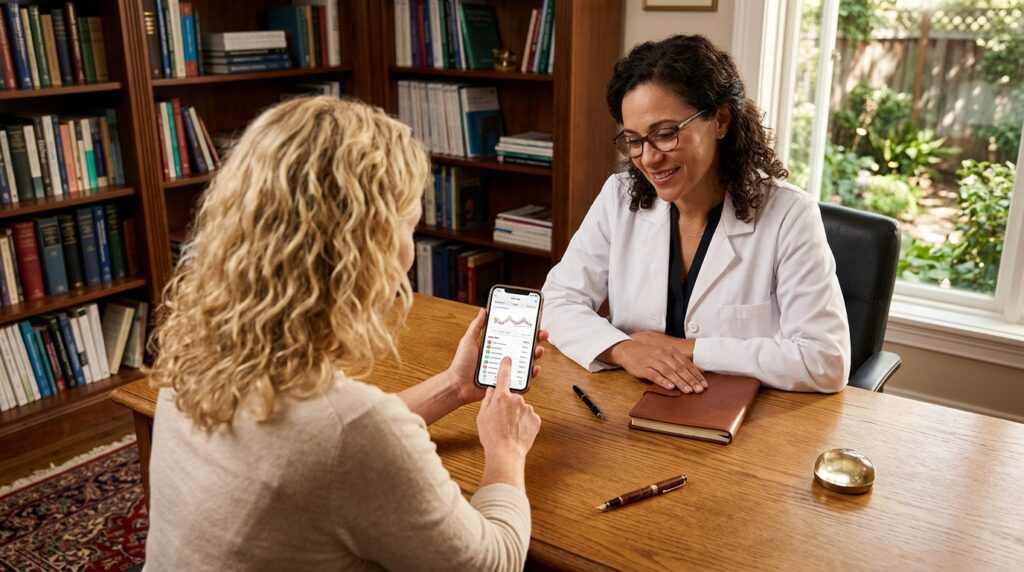
I didn’t walk into the clinic empty-handed, relying on my foggy memory. I walked in with a printed PDF report exported directly from my app.
When the doctor asked, “How have you been feeling?” I didn’t say, “Fine.”
Instead, I handed over the report and said, “Over the last twelve months, I experienced 14 headache days. They directly correlate with barometric pressure drops. I also eliminated dairy from my diet based on an energy-slump correlation, and my average daily energy score went from a 4/10 to an 8/10. However, I have noticed a slight increase in lower back pain over the last month that hasn’t resolved with stretching.”
The doctor literally paused and stared at the paper.
The entire dynamic of the room shifted. I was no longer a passive patient waiting for a wise sage to guess what was wrong with me. We were two informed adults looking at objective data, collaborating on my health.
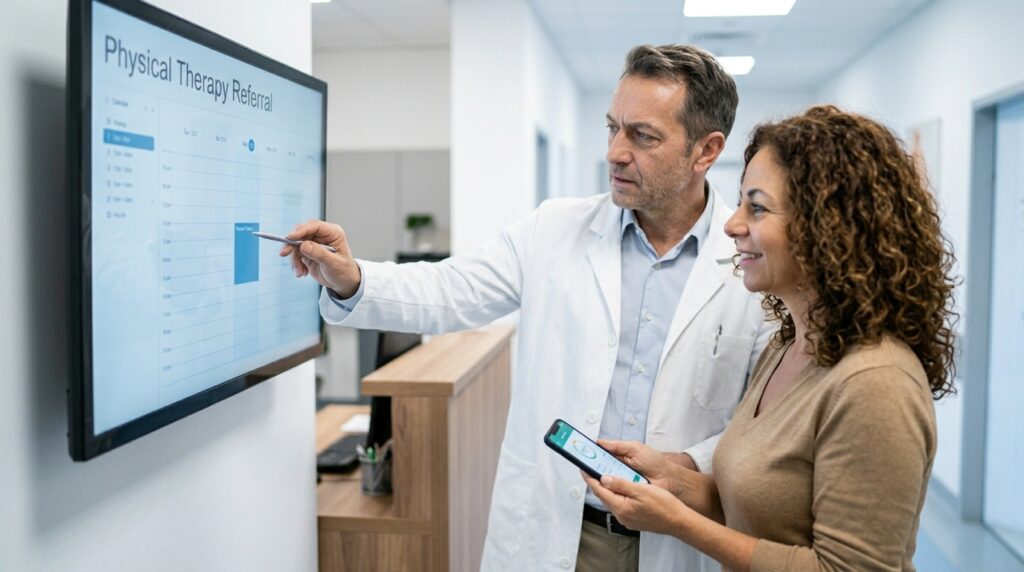
Because we didn’t have to spend ten minutes trying to untangle vague complaints, the doctor immediately referred me to a physical therapist for the back pain—a targeted, precise action based on hard evidence.
The app didn’t replace my doctor; it allowed my doctor to actually do their job efficiently. It provided the critical context that the medical system simply isn’t designed to capture.
Avoiding the Trap of Health Anxiety
I feel it is important to offer a word of caution here. While having access to this level of personal biological data is incredible, it can also be a double-edged sword.
When you start tracking every single heartbeat, every hour of sleep, and every minor symptom, it is very easy to slip into health anxiety. You can become obsessed with the numbers. If my smartwatch told me I had a poor “recovery score,” I used to let it ruin my entire day, even if I actually woke up feeling perfectly fine.
You have to learn how to use the app as a mirror, not as a master.
If you find yourself obsessing over the metrics, it is crucial to take a step back and build healthier boundaries with the technology. I have had to navigate this exact issue myself, which inspired me to write about the Tips for Tracking Your Fitness Without Feeling Overwhelmed.
The goal of health tracking is to identify broad, long-term trends, not to panic over a single day’s data. If my heart rate is slightly elevated on a Tuesday, I ignore it. If it is elevated for three weeks straight, then I take that data to a professional.
Customizing the App to Your Unique Life
What makes a truly great health app stand out is its flexibility. We are all biologically unique. A generic app that only asks about “diet and exercise” is useless if your primary health struggle is a chronic illness, a mental health condition, or a specific allergy.
The application I trust allows me to build custom tracking modules.
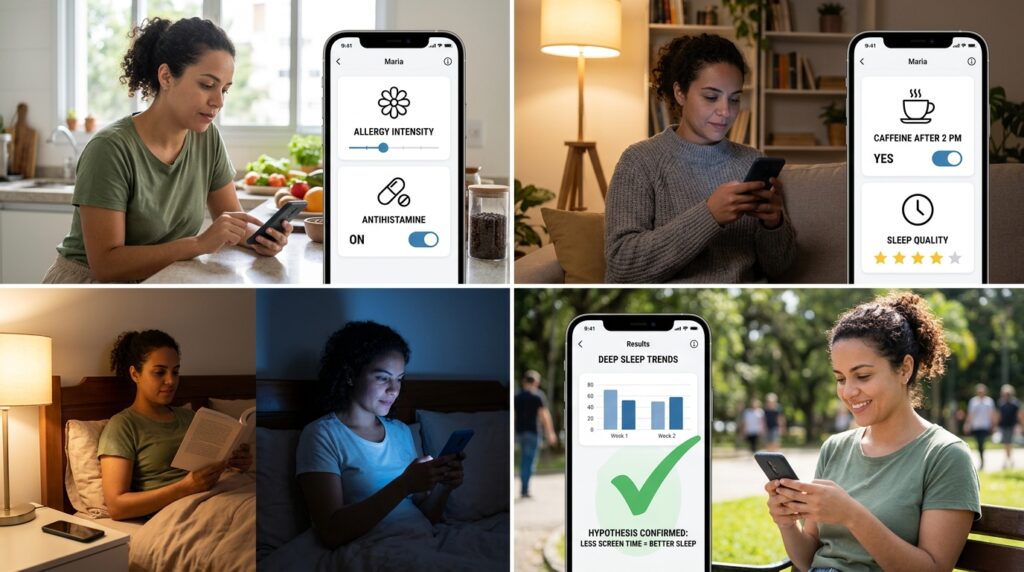
During the spring, when the flowers bloom here in Brazil, my allergies go crazy. I easily added a custom toggle switch to track “Antihistamine Use” and a sliding scale for “Sinus Pressure.”
When I was trying to figure out if coffee was causing my insomnia, I added a custom tracker for “Caffeine After 2 PM.”
The app molds itself to whatever health mystery I am currently trying to solve. It acts as a blank scientific canvas for running personal experiments. I form a hypothesis (“I think looking at my phone in bed is ruining my deep sleep”), I track the variable for a month, and the app gives me the undeniable, mathematical truth.
Final Thoughts on Personal Health Sovereignty
We live in a miraculous era of medicine. If I need surgery, or life-saving medication, or an MRI, I am incredibly grateful for the brilliant doctors and the medical infrastructure that exists today.
But doctors are mechanics. You only take your car to the mechanic when the check engine light comes on, or when it’s time for an oil change.
You are the one who has to actually drive the car every single day. You are the one who notices if the steering wheel pulls slightly to the left, or if the engine sounds a little weird when it idles in the cold.
For the vast majority of our lives, health is not determined in a clinic. It is determined in our kitchens, in our bedrooms, and at our office desks. It is the sum total of thousands of tiny, daily choices.
By trusting a health app to objectively record those choices, I removed the guesswork from my wellness journey. I stopped wondering why I felt terrible and started actually understanding the biological mechanics of my own body.
If you are tired of vague diagnoses, if you feel like your memory is failing you in the waiting room, or if you simply want to understand exactly what makes you feel your best, download a daily tracking tool. Commit to sixty seconds of brutal honesty every morning and every evening.
You might just discover that the answers to your most frustrating health mysteries weren’t hiding in a doctor’s chart at all. They were hiding in your daily routine, just waiting to be mapped out.
