
For the majority of my twenties, my definition of “health” was entirely reactive. If I wasn’t actively sick with a fever, and if I didn’t have a broken bone, I assumed I was perfectly healthy. I treated my body like a rental car: I put the absolute minimum amount of maintenance into it and expected it to perform flawlessly on demand.
It took a bizarre, prolonged period of sheer exhaustion to make me realize how fundamentally flawed this approach was.
I was waking up after a full eight hours of sleep feeling like I had been hit by a freight train. My energy would completely crash by 2:00 PM every single afternoon, leaving me staring blankly at my computer monitor. My joints ached, my skin was breaking out, and I existed in a constant, low-grade state of mental fog.
When my annual blood work came back completely “normal,” I felt defeated. The medical system told me I was fine, but my daily lived experience was telling me that my engine was sputtering.
I realized that true wellness is not just the absence of disease; it is the presence of vitality. And if I wanted that vitality back, I couldn’t just rely on a fifteen-minute doctor’s appointment once a year. I needed to take ownership of my own biological data. I needed to understand what was actually happening inside the machine.
Our smartphones are often blamed for our declining health—they keep us sedentary, ruin our posture, and flood our brains with anxious notifications. However, when you ruthlessly curate your digital ecosystem, your phone transforms from an anxiety-delivery device into a world-class, personalized medical assistant.
Over the past few years, I have systematically downloaded, tested, and deleted hundreds of health-focused platforms. Most of them are gimmicks. But a select few are genuinely life-changing. Here are the 7 health apps that fundamentally rewired my physical well-being and earned a permanent spot on my home screen.
1. Cronometer: The Micronutrient Master
When people start tracking their food, they usually download an app that focuses entirely on macronutrients: proteins, fats, and carbohydrates. They become obsessed with hitting a specific calorie goal to lose or gain weight.
I fell into this trap initially. I was hitting my calorie goals perfectly, but I still felt terrible.
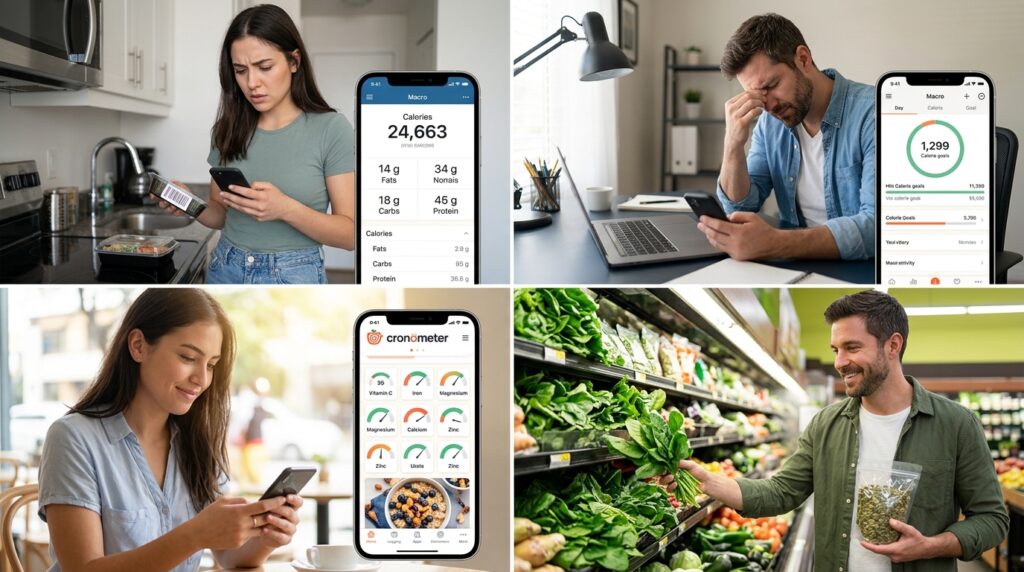
Then I discovered Cronometer. While it certainly tracks calories, its true superpower is its relentless focus on micronutrients. The database is incredibly rigorous, pulling data directly from clinical and laboratory sources rather than relying on unverified user submissions.
When I log a bowl of oatmeal with blueberries and almonds, Cronometer doesn’t just tell me it was 400 calories. It shows me a beautiful, detailed dashboard of my vitamins and minerals. It tells me that I hit 80% of my daily Manganese requirement, 15% of my Vitamin E, but that I am severely lacking in Zinc and Folate for the day.
This app illuminated massive blind spots in my diet. I realized that my afternoon fatigue wasn’t a lack of sleep; it was a chronic, low-level iron and magnesium deficiency. By using Cronometer to adjust my diet—adding spinach here, a handful of pumpkin seeds there—I solved my energy crisis without taking a single synthetic supplement. It taught me that food is literally cellular information, not just fuel.
2. Sleep Cycle: The Circadian Rhythm Rescuer
I used to think that setting an alarm clock was a necessary, unavoidable misery of adult life. You set the alarm for 6:30 AM, it screams at you, you feel awful, and you drag yourself to the coffee machine.
I didn’t understand the mechanics of sleep inertia. When an alarm goes off while you are in the deepest stage of REM sleep, it is the biological equivalent of slamming on the brakes of a car traveling eighty miles an hour. Your brain is utterly disoriented, and that groggy feeling can linger for hours.
Sleep Cycle is an intelligent alarm clock that completely eliminates this shock to the system.
You place your phone on your nightstand, and the app uses the microphone to monitor your movements and breathing patterns throughout the night. You give the app a thirty-minute window (e.g., wake me up between 6:00 AM and 6:30 AM). The software waits until it detects that you have naturally cycled out of deep sleep and into a light sleep phase before it gently begins to play a soft, escalating melody.
Waking up during light sleep feels entirely different. You open your eyes naturally, without the jolt of adrenaline. It is arguably the most impactful habit you can implement. Understanding how small interventions like this compound over time is exactly why I heavily researched (8 Apps That Helped Me Build Better Habits). When you start your morning peacefully, the rest of the day naturally aligns.
3. WaterMinder: The Dehydration Eradicator
It is almost embarrassing to admit how long I lived in a state of chronic, mild dehydration. I simply didn’t notice I was thirsty until I had a raging headache. I was relying on coffee for energy and completely ignoring the most fundamental building block of human biology.
I needed a system that removed the requirement of remembering to drink. I downloaded WaterMinder.
The app calculates your precise daily hydration needs based on your body weight, your gender, and the current weather in your area. You are presented with a simple, visual avatar of a human body. Every time you drink a glass of water, you tap a button, and the digital body fills up with blue liquid.
It sounds incredibly basic, but the visual gamification works. When I look at my phone screen at 3:00 PM and see that my avatar is only filled to the knees, it creates an immediate psychological urge to go to the kitchen and grab a glass of water. It sends gentle, non-intrusive push notifications throughout the day reminding me to take a sip. My skin cleared up, my digestion improved flawlessly, and my afternoon headaches vanished within the first week of consistent use.
4. Strong: The Weight Room Demystified
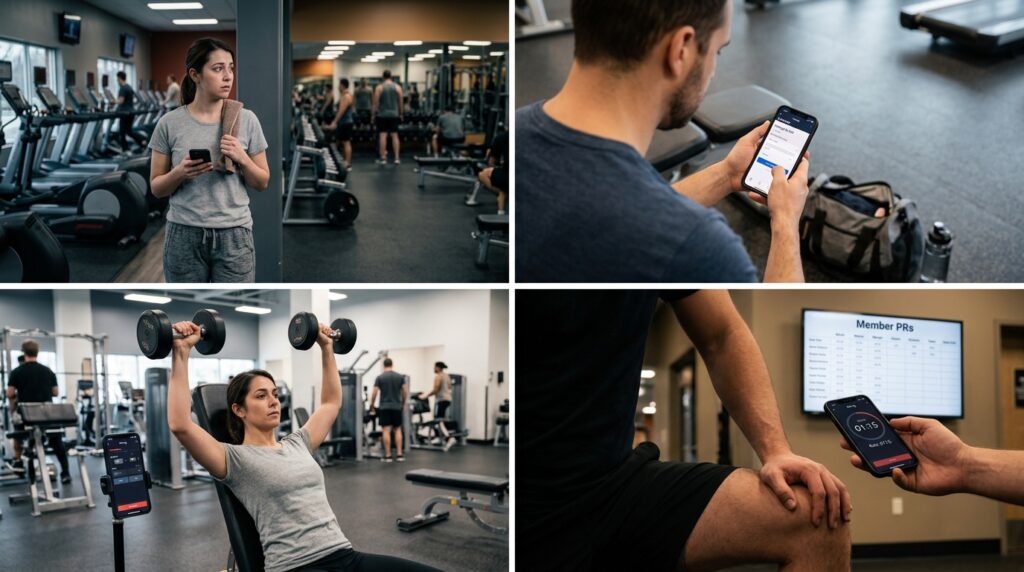
For a very long time, walking into a gym terrified me. I would hover around the cardio machines because they were intuitive. The free-weight area, however, felt like a complex, intimidating puzzle. I didn’t know what exercises to do, how much weight to lift, or how long to rest.
Strong is an app designed specifically for weightlifting, and it completely removed the guesswork from my strength training.
It is the cleanest, most intuitive workout logger I have ever encountered. You can build your own routines or choose from their extensive library of established programs. When you start a workout, the app tells you exactly what exercise is next. You input the weight and the reps, and the moment you finish a set, it automatically starts a customized rest timer.
The true magic of the Strong app is its historical data. When I walk up to the bench press, I don’t have to remember what I did last week. The app tells me, “Last time, you lifted 135 lbs for 8 reps.” It pushes me to practice progressive overload by adding just a little more weight or one more rep. This meticulous data tracking is a massive part of a broader health strategy, which I outlined in (How to Track Your Fitness Goals With Apps That Work). You cannot improve what you do not measure, and Strong measures everything with flawless precision.
5. Zero: The Digestion Reset Button
A few years ago, I started reading about the science of intermittent fasting. The research suggested that giving your digestive system a prolonged break every day could reduce inflammation, stabilize blood sugar, and improve cellular repair.
I decided to try a simple 16:8 protocol—fasting for sixteen hours and eating all my meals within an eight-hour window.
Doing the math in my head every day (“Okay, I finished dinner at 7:30 PM, so that means I can eat again at… 11:30 AM?”) was surprisingly annoying. Zero is an app that handles the timing for you with an incredibly sleek, beautiful interface.
When you finish your last meal of the day, you open the app and tap “Start Fast.” A visual timer begins counting up. The app provides fascinating scientific insights along the way, sending you a notification saying, “You have been fasting for 12 hours; your body is now entering a state of ketosis.”
Seeing the timer running on my lock screen is the ultimate deterrent against late-night, mindless snacking. If I get the urge to eat a bowl of cereal at 10:00 PM, I look at the app, see that I am three hours into a fast, and decide I don’t want to break my streak. It instilled an ironclad sense of discipline around my evening routines.
6. Bearable: The Holistic Symptom Detective
We are incredibly bad at noticing patterns in our own health. If you get a migraine on a Thursday, you probably won’t remember that you ate an unusual amount of dairy on Tuesday and slept poorly on Wednesday. We treat symptoms as isolated events rather than connected data points.
Bearable is arguably the most powerful health tracking app on the market because it is entirely customizable.
It allows you to track literally anything: your mood, your energy levels, specific symptoms (like joint pain or bloating), your sleep, your medications, and your daily habits. It takes about two minutes every evening to input your data into their beautifully designed interface.
After a few weeks, the app’s algorithm goes to work. It cross-references your data and provides stunning, undeniable insights. It will show you a graph proving that on days you drink more than one cup of coffee, your sleep quality drops by 30%. It will show you a direct correlation between eating gluten and reporting a “depressed” mood two days later.
This app empowered me to take a massive stack of data to my next checkup, a dynamic I explored thoroughly when writing about (Why I Trust This Health App More Than My Doctor Sometimes). Instead of giving my physician a vague “I feel tired,” I was able to hand them a chart mapping my exact energy dips alongside my dietary triggers. It transforms you from a passive patient into an active, informed researcher of your own biology.
7. Insight Timer: The Nervous System Calibrator
Finally, no health toolkit is complete without addressing the mind. Physical health is entirely compromised if your nervous system is trapped in a chronic state of fight-or-flight.
I struggled with traditional meditation apps. I found the rigid, progressive courses too restrictive. If I came home feeling a very specific type of work-related anger, a generic “mindfulness” track didn’t help me.
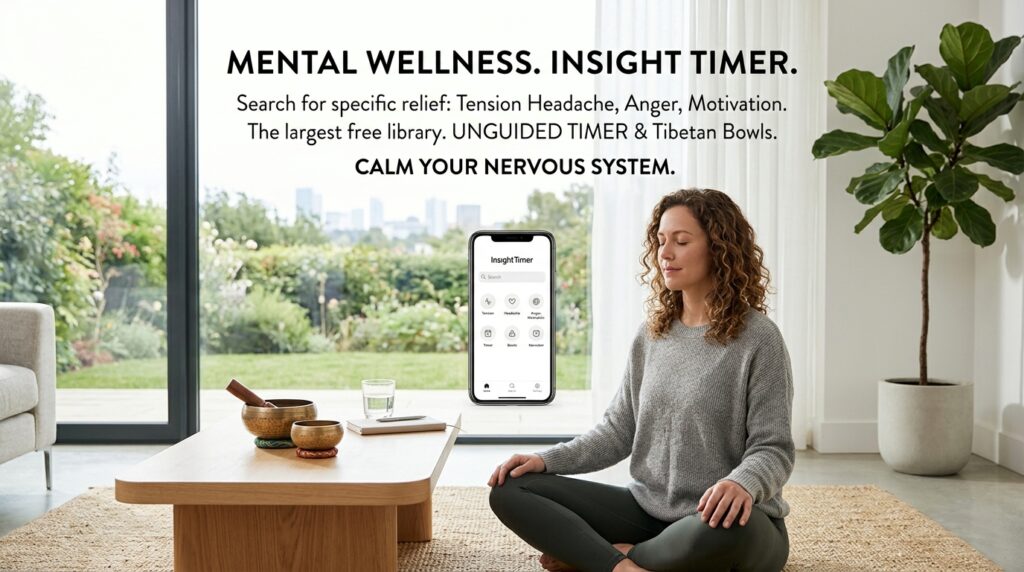
Insight Timer is an absolute treasure trove for mental health. It is essentially the YouTube of meditation. It boasts the largest free library of guided meditations, sound baths, breathwork exercises, and philosophical talks on the internet.
The search function is its greatest asset. If I have a tension headache, I can type “tension headache relief” and find dozens of tracks from global experts designed to address that specific physical sensation. If I wake up feeling unmotivated, I can find a three-minute, high-energy visualization track to get my blood flowing.
More importantly, it features an unguided timer with incredibly resonant Tibetan singing bowls. On the days when I just need absolute silence to recalibrate my brain, I set the timer for ten minutes, close my eyes, and let my nervous system slowly come back down to baseline.
Final Thoughts on Biological Ownership
We live in a culture that treats health as something you buy at a pharmacy or achieve through a punishing, thirty-day diet challenge.
But true, sustainable wellness doesn’t come from a pill, and it doesn’t come from suffering. It comes from awareness. It comes from understanding the unique, specific language that your individual body speaks.
When you track your micronutrients, monitor your sleep cycles, and log your symptoms, you are learning that language. You stop guessing why you feel terrible, and you start looking at the undeniable data.
You don’t need to completely upend your life today. Pick just one of these apps. Start tracking your water intake, or start logging your sleep. Give it a month. Once you see the first piece of hard evidence connecting your daily habits to your physical reality, you will never want to go back to flying blind again. You will finally take the keys, step into the driver’s seat, and start taking proper care of the vehicle that carries you through this life.
