
If you had asked me two years ago what my morning routine looked like, I would have laughed and told you it was a highly choreographed disaster.
My alarms—yes, plural, because I had at least six of them set in five-minute increments—would start going off at 6:30 AM. The default, aggressive blare of my smartphone would shock my nervous system awake. I would blindly reach over, slap the snooze button, and fall back into a fractured, anxious sleep.
When I finally dragged myself out of bed at 7:15 AM, I was already losing the day. I would grab my phone, stumble into the bathroom, and sit on the edge of the tub, immediately opening my email and social media feeds. Before I had even brushed my teeth or tasted a drop of coffee, my brain was being flooded with the stressful demands of my boss, the polished, fake lives of influencers, and the chaotic news cycle of the entire world.
I was starting every single day on the defensive. I felt chronically rushed, overwhelmed, and completely out of control.
I kept reading articles about billionaire CEOs who woke up at 4:00 AM, ran ten miles, meditated in an ice bath, and drank green juice before the sun came up. I tried to copy them. I would set my alarm for 5:00 AM, last exactly two days, crash from exhaustion by Wednesday, and feel like an absolute failure.
The turning point came when I realized that I was blaming my smartphone for my terrible mornings. I viewed it as a toxic distraction box that was stealing my sleep and hijacking my attention. But the phone is just a piece of hardware. It has no agenda of its own. It only does exactly what you program it to do.
I decided to stop fighting my device and start programming it to act as my personal morning coach. I ruthlessly deleted the apps that were stealing my peace and installed a carefully curated ecosystem of tools designed to wake me up gently, protect my focus, and build my momentum.
If your mornings feel like a stressful race against the clock, you don’t need to join the 5:00 AM club, and you don’t need to throw your phone in a river. You just need a better system. Here is the exact, step-by-step digital blueprint I used to build a morning routine that actually works.
Phase 1: You Cannot Fix Your Morning in the Morning
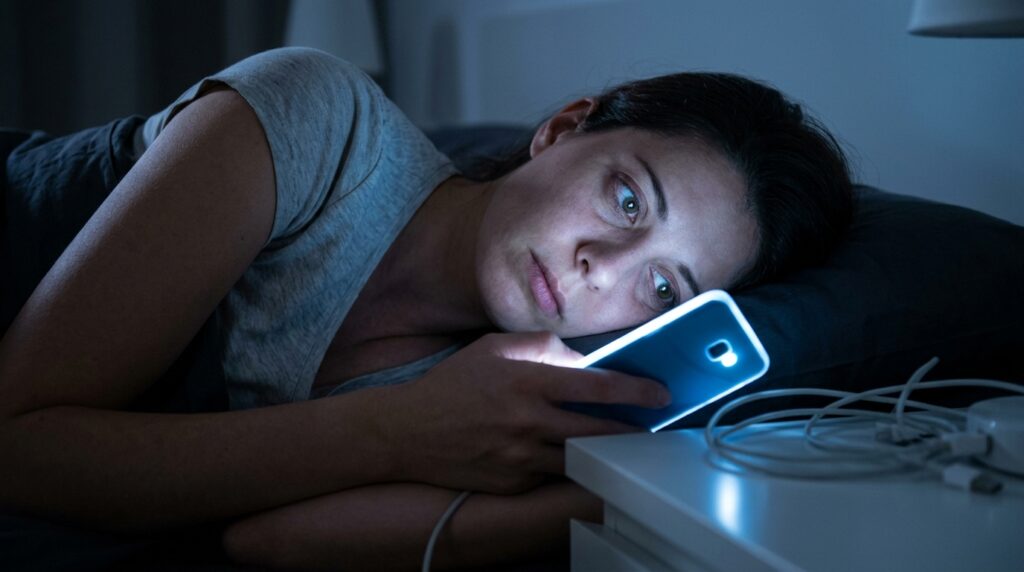
The biggest secret to a successful morning routine is that it actually begins at 9:00 PM the night before. If you go to sleep stressed, staring at a blue light screen until the moment your eyes close, you are going to wake up feeling like you were hit by a truck.
I had to use my phone to physically force me to go to sleep.
I started utilizing the native “Sleep Mode” and “Wind Down” features built into my smartphone’s operating system. I scheduled my Wind Down period to begin at 9:30 PM. At that exact moment, my phone screen automatically turns black and white.
This simple color shift is psychologically profound. Without the vibrant reds and bright blues, Instagram and YouTube suddenly look incredibly boring. The dopamine hit vanishes.
Next, I set up a digital barrier. I configured my phone so that at 10:00 PM, all notifications are completely silenced except for emergency calls from my immediate family. I also integrated this with my smart home devices—a trick I explored deeply when outlining (How I Automated My Daily Tasks With Mobile Apps). When my phone enters Sleep Mode, it automatically dims the lights in my apartment and turns on my bedroom fan.
By automating the wind-down process, I don’t have to rely on my own depleted nighttime willpower to close my apps and go to sleep. The phone literally shuts the environment down for me.
Phase 2: The Evolution of the Alarm Clock
The standard smartphone alarm is a biological nightmare. When you are in the deepest stage of REM sleep and a harsh radar siren suddenly blares, it triggers a massive spike of cortisol and adrenaline. It is the evolutionary equivalent of waking up because a predator is attacking you. You feel groggy, disoriented, and miserable.
I deleted my native alarm app entirely and downloaded Sleep Cycle.
Sleep Cycle is a highly intelligent alarm clock that uses your phone’s microphone to monitor your breathing and movement throughout the night. You give the app a thirty-minute wake-up window—for example, between 6:30 AM and 7:00 AM.
The software waits until it detects that you have naturally transitioned out of deep sleep and into a light sleep phase. Then, it begins to play a soft, slowly escalating melody. Waking up during light sleep changes everything. You open your eyes naturally, feeling refreshed rather than startled.
But I still had a problem: I am a chronic snoozer. Even with a gentle alarm, the temptation to stay under the warm blankets was too strong.
To solve this, I downloaded an app called Alarmy for the days when I knew I absolutely had to get out of bed immediately. Alarmy is delightfully ruthless. You can set it so that the alarm will only turn off if you physically get out of bed, walk into another room, and scan a specific barcode.
I set mine to the barcode on my toothpaste tube. When the alarm goes off, I cannot simply swipe the screen to silence it. I have to physically stand up, walk into the cold bathroom, turn on the light, and scan the toothpaste. By the time I have done that, I am upright, the light is in my eyes, and the urge to go back to bed is completely gone.
Phase 3: Erecting the Digital Fences
Getting out of bed is only half the battle. The real danger of the modern morning is the “doomscroll.”
If the first thing you do when you open your eyes is check your email, you are instantly reacting to other people’s priorities. If you check the news, you are injecting the world’s anxiety directly into your waking brain.
I needed to build an unbreakable digital fence around the first hour of my day. I use an app called Freedom, which is an aggressive, system-wide website and application blocker.
I set up a recurring schedule in Freedom. From 10:00 PM until 8:00 AM every single morning, my phone is completely locked out of Safari, Instagram, Twitter, Reddit, and my Gmail app. If I try to open them, the screen just shows a green shield blocking my access. I literally cannot check my email even if I want to.
This forced digital isolation was uncomfortable for the first few days. My brain was craving the cheap dopamine hit of the morning scroll. But once the withdrawal faded, I discovered a profound sense of peace. That first hour of the day belongs entirely to me. No one can reach me, no one can demand my attention, and no algorithm can manipulate my emotions.
Phase 4: Tracking the Keystone Habits
With my phone locked down and my distractions eliminated, I finally had the time and mental clarity to actually execute a healthy routine. But I still needed structure. If I didn’t have a plan, I would just end up staring blankly at the kitchen wall while the coffee brewed.
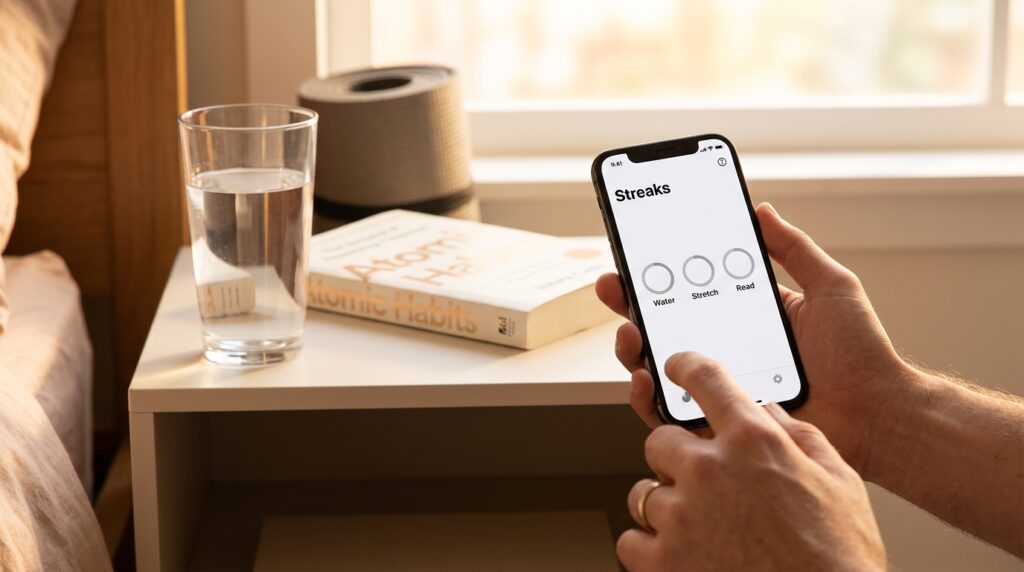
I didn’t want a complex, 50-step morning routine. I just wanted to nail three simple, keystone habits: Drink a large glass of water, stretch for ten minutes, and read ten pages of a physical book.
To keep myself accountable, I used a minimalist app called Streaks.
Streaks is brilliant because it leverages human stubbornness. Every morning that I drink my water, stretch, and read, I get to tap the circles on my screen and watch my streak counter go up.
Once you get a streak going for 15 or 20 days, you simply do not want to break it. The visual representation of your consistency becomes a powerful motivator, a psychological phenomenon I explored when writing about (How to Stay Motivated With Habit Tracker Apps). The physical act of checking those boxes on my screen before 7:30 AM gives me an immediate, tangible sense of accomplishment. I have already won the day before I have even left my apartment.
Phase 5: The Audio Upgrade
Because I was no longer allowed to look at social media or watch videos during my morning routine, I needed something else to engage my mind while I made breakfast and got dressed.
I turned my phone into a dedicated audio companion.
I use Spotify and Audible, but I am highly intentional about what I play. I do not listen to heavy political commentary or chaotic morning radio shows. I curate my morning audio to be uplifting, educational, or deeply calming.
Sometimes it is a podcast about history. Sometimes it is an audiobook about behavioral psychology. Sometimes, if I am feeling particularly scattered, I will open Insight Timer and play a ten-minute guided breathing exercise while my coffee is brewing.
By feeding my brain high-quality, long-form audio content instead of bite-sized, outrage-inducing social media clips, I set a calm, focused baseline for my entire cognitive output for the rest of the day.
Phase 6: Grounding the Day’s Mission
At 7:45 AM, I am fully awake, hydrated, stretched, and I have read a few pages of a good book. My coffee is in my mug, and I am finally ready to confront the actual demands of the day.
But I still don’t open my email.
Before I let anyone else dictate my agenda, I open my task manager. I use Todoist, which is the absolute backbone of my professional life. I sit down for exactly five minutes, look at my calendar, and look at my task list.
I pick the three most important things I need to accomplish today. Not twenty things—just three. I flag them, move them to the top of my list, and mentally commit to getting them done no matter what fires pop up later in the afternoon. Establishing this quiet, strategic overview is vital, which is exactly why I constantly recommend revisiting (The Productivity App That Changed How I Work Every Day).
When you define your own “win condition” for the day before you even look at your inbox, you are operating from a place of immense power and clarity.
At 8:00 AM, my Freedom app block automatically lifts. The notifications arrive. The emails ping. The world comes rushing in. But it doesn’t matter anymore. I am already armored up.
Final Thoughts on Redefining Your Morning
We have completely misunderstood what a “good” morning routine actually means.
It is not about punishing yourself. It is not about waking up at an ungodly hour just to prove how disciplined you are. It is not about cramming a two-hour workout, an hour of meditation, and a gourmet breakfast into a frantic window of time.
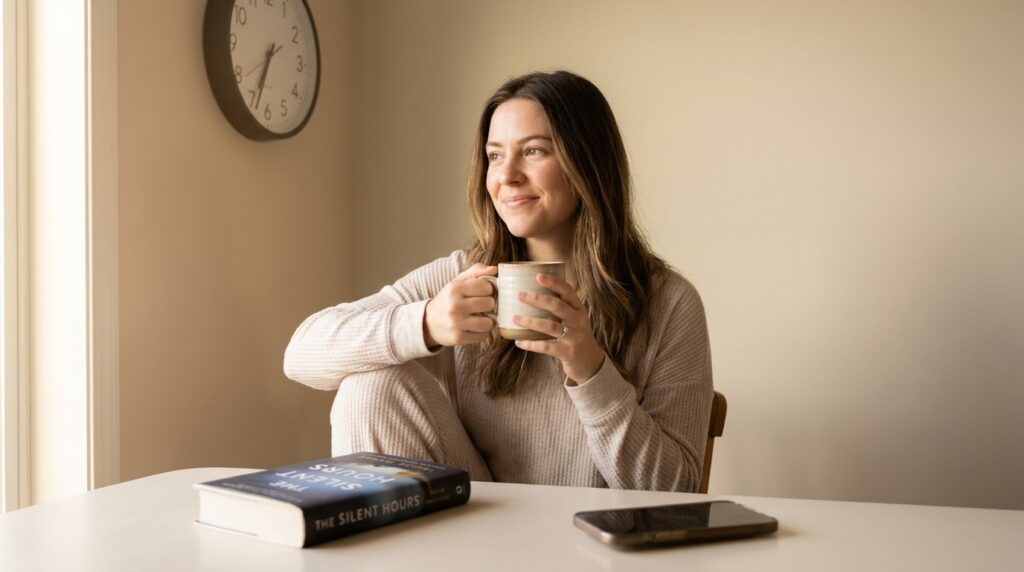
A good morning routine is simply a predictable, low-stress sequence of events that transitions you from asleep to awake while protecting your mental health.
Your smartphone is the ultimate double-edged sword. It has the power to ruin your morning before you even put your feet on the floor, flooding your brain with cortisol and cheap dopamine. But it also has the power to gently wake you up, block your worst impulses, track your positive habits, and feed your brain high-quality information.
The choice comes down entirely to how you configure the software.
Take ten minutes tonight to change your settings. Set up a Wind Down schedule. Download a better alarm clock. Block your social media apps until you have actually started your day. Take control of the glass rectangle in your pocket, and watch as your mornings slowly transform from a chaotic scramble into the most peaceful, productive hours of your life.
