
A few years ago, I had a harsh realization while cleaning out my hall closet. I stumbled upon an acoustic guitar with broken strings, a thick textbook on conversational French still wrapped in its plastic, and a specialized watercolor painting kit I had bought on a whim.
It was a museum of my abandoned hobbies.
As an adult with a full-time job, rent to pay, and a chaotic social life, I had completely lost the ability to learn new things. I would get inspired, buy the necessary equipment, and try to dedicate two hours every Sunday to mastering a new skill.
But life always got in the way. Sundays would become laundry days or grocery days. The heavy textbooks felt too intimidating after a long day of staring at spreadsheets. My brain was simply too exhausted for traditional, classroom-style learning. I had convinced myself that my window for acquiring new talents had permanently closed the moment I graduated from college.
I was completely wrong.
The problem wasn’t my age, and it wasn’t a lack of discipline. The problem was my methodology. I was trying to fit bulky, old-school learning models into a highly fragmented, modern lifestyle.
The breakthrough happened when I stopped fighting my smartphone and started using it as a portable university. Instead of trying to find two uninterrupted hours on a weekend, I started hunting for fifteen-minute pockets of “dead time” during my day. Waiting for the bus. Sitting in a doctor’s waiting room. Boiling water for pasta.
When you shift to micro-learning, everything changes. Developers have spent millions of dollars figuring out how to make education as addictive as social media. If you want to finally pick up that guitar, learn to code, or speak a new language, throw away the heavy textbooks. Here are the 10 apps that completely transformed my ability to learn new skills.
1. Skillshare: The Creative Playground
For a long time, I wanted to learn graphic design and basic video editing, but enrolling in a community college course was entirely out of the question. YouTube tutorials were okay, but they were often disorganized, and I would get distracted by recommended videos about conspiracy theories or cat compilations.
Skillshare was the perfect antidote.
It is a massive library of project-based classes taught by actual industry professionals. What makes Skillshare incredible for adults is the pacing. The instructors break complex skills down into three-minute, highly digestible video segments.
I learned the basics of Adobe Illustrator while riding the subway to work. Because every class is tied to a specific, hands-on project, you aren’t just passively watching; you are actively creating. By the end of a two-hour course (watched in tiny chunks over a week), I had designed my own logo. It gave me the immediate, tangible reward I needed to stay motivated.

2. Duolingo: The Master of Gamified Consistency
We cannot talk about learning on a smartphone without bowing down to the infamous green owl.
When I finally decided to unwrap that French textbook and actually learn the language, I didn’t open the book. I downloaded Duolingo instead.
Learning a language is an incredibly daunting task because the progress is invisible for months. Duolingo bypasses this frustration by turning vocabulary acquisition into a high-stakes video game. You earn experience points, climb weekly leaderboards, and lose “hearts” when you make a mistake.
The genius of the app is its streak mechanic. I became so obsessed with not losing my daily streak that I would literally practice my French conjugations at 11:45 PM in bed. It builds an ironclad routine. I actually documented this exact psychological phenomenon in my post about (How I Learned a New Language Using Only My Smartphone), because gamification is the ultimate hack for adult apathy. It takes the heavy lifting out of discipline.
3. Yousician: The Virtual Music Teacher
Remember that broken acoustic guitar in my closet? Yousician is the app that finally got me to string it back up and actually play it.
Learning an instrument traditionally requires paying a human teacher seventy dollars an hour to watch you play scales. Yousician replaces the human with your smartphone’s microphone.
You set your phone on the coffee table, grab your guitar (or sit at your piano), and the app acts like a game of Guitar Hero, but for real instruments. The screen displays the notes or chords you need to hit, and as you play, the app’s audio recognition software listens to you in real-time.
If you hit the wrong string, the note on the screen turns red. If your timing is off, it tells you to speed up or slow down. Getting instant, objective feedback without the judgment of a frustrated music teacher allowed me to practice at my own terrible pace until I finally mastered my first real song.
4. SoloLearn: Coding on the Commute
The idea of learning to code used to terrify me. I assumed you needed three monitors, a degree in mathematics, and a basement to write a single line of Python.
SoloLearn completely demystifies the programming world. It is an app built specifically for writing and understanding code on a small, vertical screen.
Instead of overwhelming you with massive blocks of text, SoloLearn treats coding like a spoken language. It teaches you the basic syntax, tests you with multiple-choice questions, and then immediately asks you to write a few lines of code directly in the app’s built-in compiler.
You can literally write, run, and debug real code while waiting in line at the grocery store. It strips away all the intimidating software setup and lets you jump straight into the logic of programming. It made learning Python feel less like a college exam and more like solving a crossword puzzle.
5. MasterClass: The Inspiration Engine
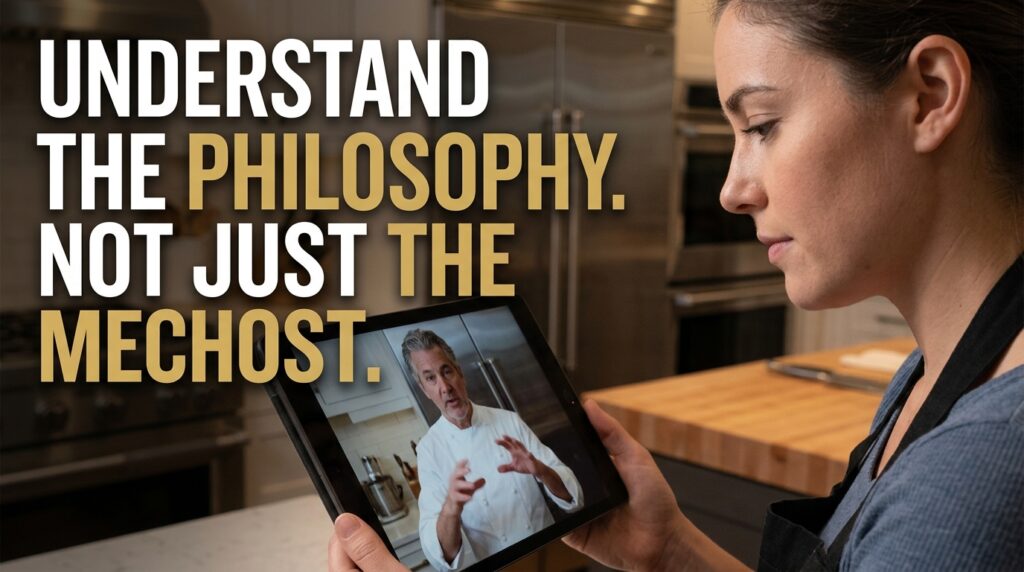
Sometimes, learning a new skill isn’t about memorizing the technical mechanics; it’s about understanding the underlying philosophy.
When I wanted to improve my cooking, I didn’t want another app telling me to “chop an onion.” I wanted to know how a chef thinks about flavor. MasterClass is the ultimate premium learning experience.
The production value is indistinguishable from a high-end Netflix documentary. I watched Gordon Ramsay explain the chaos of a kitchen, and Aaron Sorkin break down the rhythm of writing dialogue.
While it is less interactive than the other apps on this list, MasterClass provides unparalleled inspiration. When I felt my motivation dipping, watching the absolute best people in the world talk passionately about their craft was enough to reignite my drive. It is the perfect app to cast to your television on a Sunday afternoon when you want to absorb brilliance.
6. Anki: The Memory Hacker
Acquiring a new skill is only half the battle. The real war is remembering what you learned two weeks later.
Whether I was trying to memorize French vocabulary, coding terms, or the keyboard shortcuts for my video editing software, my brain would inevitably dump the information if I didn’t use it every day.
Anki is a digital flashcard app that utilizes a concept called Spaced Repetition. It is an absolute lifesaver.
When you flip a digital card in Anki, the app asks you how hard it was to remember the answer. If you remembered it easily, the app hides the card for a week. If you struggled, it shows it to you again in ten minutes. It algorithmically forces you to study only the specific concepts you are on the verge of forgetting.
If you want to understand how consistent micro-actions change your brain chemistry, I went deep into this philosophy in my article about (8 Apps That Helped Me Build Better Habits). Anki ensures that the hard work you put into learning something new is never wasted by human forgetfulness.
7. Coursera: The Heavyweight Champion
There are certain skills—like data analytics, project management, or UX design—that require a level of academic rigor you just can’t get from a three-minute YouTube video.
For these serious, career-shifting skills, Coursera is unmatched.
Coursera partners with actual universities like Yale and Stanford, as well as massive tech companies like Google and IBM, to offer legitimate, certified courses. The mobile app is brilliantly designed, allowing you to download hour-long university lectures over Wi-Fi and watch them offline during your commute.
I used the Coursera app to complete a certification in digital marketing. Being able to read the syllabus, take quizzes, and submit assignments entirely from my phone meant I could chip away at a massive academic credential during my lunch breaks. It brings the ivory tower directly to your pocket.
8. Elevate: The Cognitive Gym
We spend so much time trying to learn external skills that we often neglect the core processing power of our own brains.
I noticed that as I spent more time staring at social media feeds, my reading speed was slowing down, my mental math was embarrassing, and I was struggling to find the right words during important work meetings.
I downloaded Elevate, which is essentially a personal trainer for your cognitive functions.
The app features over forty mini-games designed in collaboration with educational experts. The games are remarkably challenging. They test your reading comprehension under a time limit, force you to calculate percentages on the fly, and train you to strip redundant words out of clunky sentences.
I play Elevate for ten minutes every morning while drinking my coffee. Over the course of a few months, I noticed a dramatic, undeniable sharpness in how quickly I could articulate my thoughts and process information.
9. Brilliant: The Interactive Science Lab
If you have ever felt intimidated by math, logic, or the core concepts of computer science, Brilliant is going to completely change your perspective.
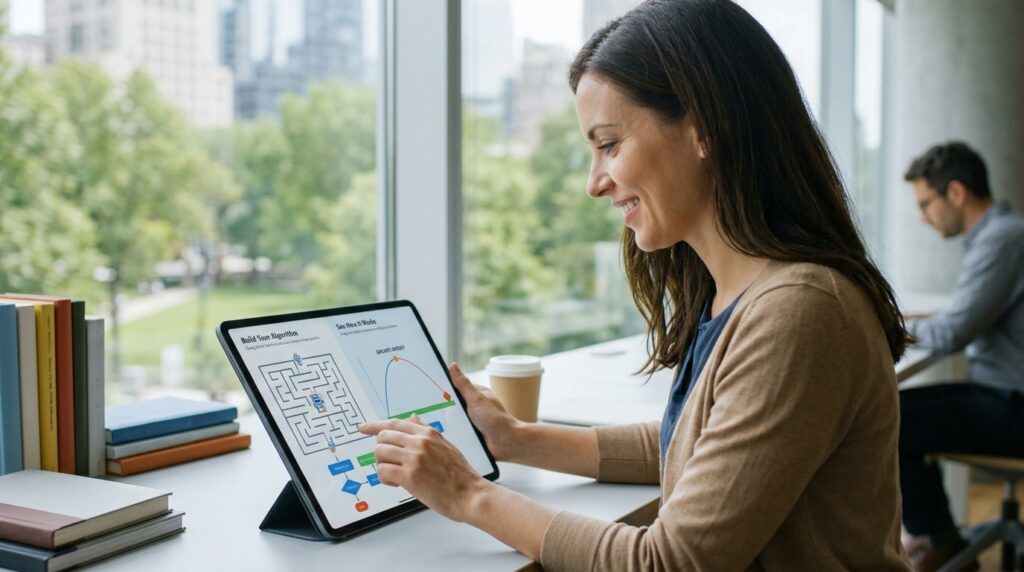
Most of us hate math because we were taught to memorize formulas without understanding the “why” behind them. Brilliant strips away the formulas and teaches you purely through interactive, visual puzzles.
You don’t watch a video about physics; you physically drag and drop objects on your screen to see how gravity affects their trajectory. You don’t read about algorithms; you build a visual flowchart to guide a digital robot out of a maze.
It makes complex, intimidating topics incredibly intuitive. It is the first app that actually made me enjoy learning about statistics, largely because it treats you like a smart adult solving a puzzle, rather than a child taking a standardized test.
10. Forest: The Distraction Destroyer
Finally, none of the apps on this list will work if you cannot maintain your focus.
The biggest hurdle to learning a new skill on your phone is that your phone is also home to Instagram, TikTok, and your text messages. It is incredibly easy to open Duolingo, receive a text, and suddenly lose an hour of your life to a group chat.
To combat this, I rely heavily on the Forest app. It is a vital tool for my digital sanity, which I discussed extensively in (How I Reduce Distractions Using Mobile Apps).
When I need to focus on a Coursera lecture or practice coding on SoloLearn, I open Forest and plant a virtual seed. I set my timer for thirty minutes. If I leave my learning app to check social media, my digital tree dies. The sheer guilt of killing a fake pine tree is enough to keep my thumb away from my notifications. It creates a psychological barrier that protects my learning time from the chaotic noise of the internet.
Final Thoughts on Your Portable Classroom
We live in the single greatest era of educational accessibility in human history.
Twenty years ago, if you wanted to learn how to code, speak Italian, or edit a video, you had to spend thousands of dollars on software, textbooks, and tuition. Today, the world’s best instructors are sitting in your pocket, waiting for you to tap their icon.
You do not need to wait for the “perfect time” to learn something new. The perfect time does not exist. Your life will always be busy, you will always be tired, and there will always be a reason to put it off until tomorrow.
Stop waiting for two free hours on a Sunday. Look at your day right now. Find ten minutes. Find the time you spend waiting for your coffee to brew, or the time you spend sitting on the train.
Download just one of these apps today. Open it instead of opening a social media feed. If you can dedicate just ten minutes a day to micro-learning, you will be absolutely astonished at the person you can become in a year. The classroom is open; you just have to log in.
