
There was a long period in my life where my mornings felt like a daily emergency. I would wake up in my apartment here in Rio de Janeiro, immediately groggy, hitting the snooze button three or four times while the humid morning air crept through the window.
By the time I finally dragged myself out of bed, I was already late. I would throw on whatever clothes were closest, skip breakfast, grab a lukewarm coffee, and sprint out the door. My heart rate was elevated before I even looked at my email. I was constantly playing catch-up, reacting to the world instead of participating in it.
I realized that my lack of a daily routine wasn’t just making me tired; it was stealing my joy. I was surviving, not living.
Like many people, I initially blamed my smartphone for my chaotic lifestyle. I blamed the late-night scrolling and the endless notifications for my lack of discipline. But eventually, I had an epiphany: the phone is just a tool. It is a highly advanced piece of glass and metal that is completely neutral until you decide what software to put on it.
Instead of trying to throw my phone in the ocean and move to a cabin in the woods, I decided to lean into the technology. I spent months curating my digital environment, transforming my device from a slot machine of distractions into a personalized, highly efficient lifestyle coach.
If you are feeling exhausted, disorganized, and perpetually behind schedule, you don’t need a massive life overhaul. You just need a better system. Here are the 7 lifestyle apps that fundamentally rewired my daily routine and brought peace back into my life.
1. The Ruthless Morning Anchor (Alarmy)
Everything hinges on how you wake up. If you lose the morning, you lose the day.
For years, the native alarm clock on my phone was my worst enemy. It was simply too easy to turn off. Half asleep, my muscle memory would find the snooze button, and I would instantly drift back into a fragmented, unhelpful sleep cycle.
I needed an alarm clock that was completely immune to my sleepy bargaining. I downloaded Alarmy, and it completely changed the trajectory of my mornings.
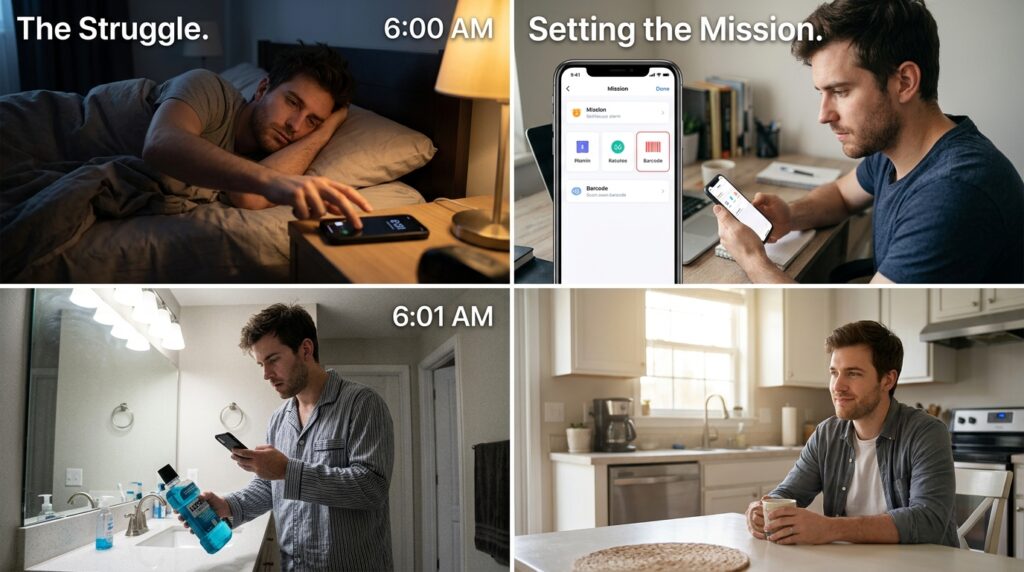
Alarmy forces you to complete a specific “mission” before the alarm will turn off. You can set it to require you to solve a math problem, shake the phone thirty times, or scan a barcode.
I chose the barcode option. I took the barcode from a bottle of mouthwash sitting in my bathroom and scanned it into the app. Now, when my alarm goes off at 6:00 AM, there is absolutely no way to snooze it. I cannot turn it off from my bed. I physically have to stand up, walk across the apartment to the bathroom, and scan that exact bottle of mouthwash.
By the time I am standing under the bathroom lights with the mouthwash in my hand, the sleep inertia is broken. I am awake. It is a brutal, unforgiving method, but it forces me out of bed every single day without fail.
2. The Hydration Gamifier (WaterMinder)
It sounds almost insultingly simple, but chronic dehydration was the invisible culprit behind my mid-afternoon brain fog and constant lethargy.
I was drinking coffee in the morning and a soda with lunch, but I was barely touching plain water. I knew I needed to drink more, but when you are busy, drinking a glass of water falls to the absolute bottom of your priority list.
I needed a visual reminder, so I downloaded WaterMinder.
The premise is straightforward. The app calculates your ideal daily water intake based on your body weight and local weather (which is crucial during the scorching Rio summers). It displays a digital avatar of your body that fills up with blue water as you log your drinks throughout the day.
The visual feedback loop is surprisingly addictive. When I am sitting at my desk and I see that my avatar is only 30% full by 2:00 PM, I feel an immediate urge to go grab a glass of water. It sends gentle, encouraging push notifications reminding me to hydrate.
Within a week of hitting my daily water goals, the persistent dull headaches disappeared, my skin cleared up, and I experienced a massive, sustained spike in my afternoon energy levels. It was the easiest lifestyle upgrade I have ever made.
3. The Visual Habit Chain (Streaks)
Once I conquered my wake-up time and my hydration, I wanted to start implementing bigger habits. I wanted to read for twenty minutes a day, meditate, and stretch before bed.
However, writing these goals down in a physical notebook never worked for me. I needed something dynamic. I adopted a dedicated habit-tracking app called Streaks to keep me accountable.
This app is elegantly designed. It gives you a clean grid of icons representing your daily goals. When you complete a task, you hold down the icon, and the circle fills up, extending your current “streak” by one day.
There is something deeply satisfying about seeing a perfect, unbroken chain of thirty days. The app leverages the psychological principle of loss aversion; you become so protective of your streak that you will gladly read ten pages of a book at 11:30 PM just to avoid breaking the chain.
I integrated this tool so deeply into my life that it became the foundation of a much broader strategy. I actually documented the exact mechanics of this shift in my guide on (How I Built a Productive Daily Routine Using Apps). A routine isn’t built in a day; it is built through the accumulation of tiny, unbroken streaks, and this app makes those streaks impossible to ignore.
4. The Digital Boundary Setter (Freedom)
You cannot have a peaceful lifestyle if you are constantly accessible to everyone, everywhere, all the time.
My mornings used to be immediately derailed because I would check social media while drinking my coffee. I would see a stressful news article or an annoying post, and my mood would be ruined before I even left the house.
I realized I needed to build digital walls to protect my peace. I downloaded Freedom, which is a relentless website and app blocker.
I set up a recurring schedule. From 10:00 PM until 8:00 AM the next morning, Freedom completely blocks my access to Instagram, Twitter, Reddit, and my personal email.
I cannot bypass it. Even if I reflexively tap the Instagram icon while drinking my morning coffee, I am greeted with a blank screen telling me the app is blocked. This forced digital isolation gives my brain the space it needs to wake up naturally, without being bombarded by algorithmic anxiety.
Setting these boundaries completely transformed my mental health, a journey I expanded upon when I wrote about (How I Reduce Distractions Using Mobile Apps). By intentionally restricting my own access to the internet, I finally reclaimed the quiet moments of my morning.
5. The Decision Fatigue Eliminator (Mealime)
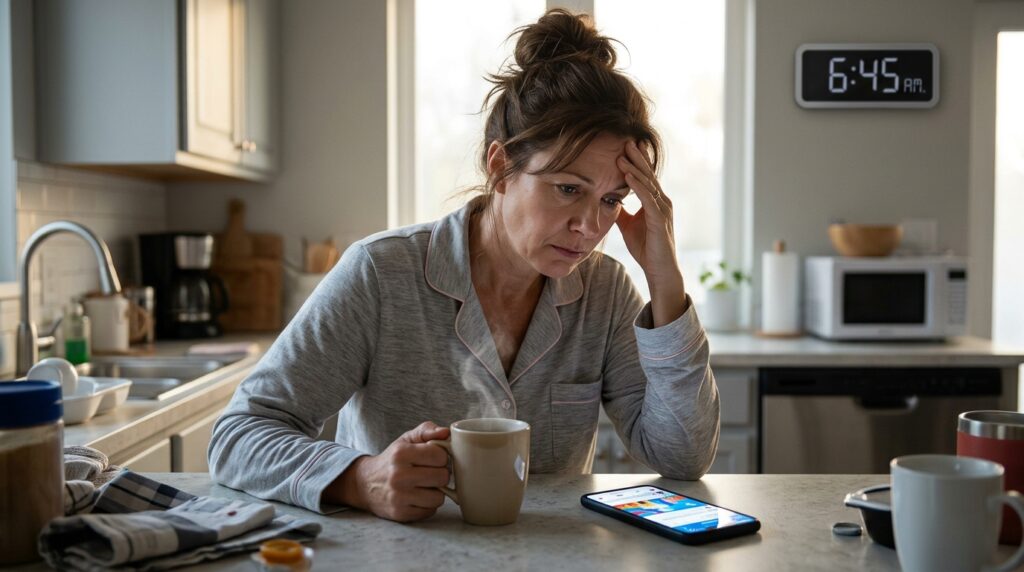
By 6:00 PM every evening, my decision-making battery is completely empty.
In the past, this led to a disastrous dinner routine. I would stand in front of my open refrigerator, stare at a random assortment of vegetables, feel completely overwhelmed, and then just order expensive takeout. It was draining my bank account and ruining my health.
Mealime is a lifestyle app that entirely eliminates the friction of cooking.
Every Sunday, I open the app and select four or five recipes from their massive, beautifully photographed database. The app asks about my dietary restrictions and automatically curates options that fit my lifestyle.
The real magic happens once the recipes are selected. Mealime automatically generates a perfectly categorized grocery list. It aggregates all the ingredients, meaning if two recipes call for half an onion, it simply puts “one onion” on the list.
When I go to the supermarket, I am in and out in twenty minutes. When 6:00 PM rolls around on a Wednesday, I don’t have to think. I just open the app, follow the step-by-step instructions, and have a healthy, home-cooked meal on the table in thirty minutes. It completely removed the stress of the evening dinner panic.
6. The Automated Chore Manager (Tody)
Maintaining a clean apartment is essential for my mental clarity, but keeping track of chores is exhausting.
I used to clean reactively. I would wait until the bathroom mirror was noticeably dirty or the floors were covered in dust, and then I would spend a miserable four hours doing a “deep clean” on a Saturday afternoon.
I wanted to transition to proactive cleaning, so I downloaded an app called Tody.
Tody is a smart chore manager that tracks the actual cleanliness of your house, rather than relying on arbitrary dates. You input all of your chores and tell the app how often they should be done. For example, “Vacuum the rug” every 7 days, “Wash the bedsheets” every 14 days, and “Clean the oven” every 180 days.
The app uses a visual indicator to show you the “dirtiness” level of every room in your house. Instead of dedicating an entire Saturday to cleaning, I just open the app for fifteen minutes a day, tackle the two or three chores that are currently in the red zone, and move on with my life.
This micro-cleaning approach is incredible. My apartment is always clean, and I never feel overwhelmed by housework. It fits perfectly into the philosophies I share in my article about (How I Automated My Daily Tasks With Mobile Apps). When you let an app remember when the baseboards were last dusted, you free up a massive amount of mental bandwidth.
7. The Sleep Architect (Sleep Cycle)
The final piece of the lifestyle puzzle happens when your eyes are closed. You cannot optimize your waking hours if your sleeping hours are a disaster.
I used to wake up feeling like I had been hit by a truck, even if I had been in bed for eight hours. I didn’t understand why until I started tracking my nights.
I downloaded Sleep Cycle, an intelligent alarm clock that analyzes your sleep patterns. You place your phone on your nightstand, and it uses the microphone to monitor your breathing and movement throughout the night.
It tracks when you are in deep sleep, REM sleep, and light sleep. In the morning, it provides a beautiful graph showing you exactly how restorative your night was. I learned that drinking coffee after 2:00 PM was completely destroying my deep sleep, even though I had no trouble falling asleep initially.
But the best feature is the smart alarm. You give the app a thirty-minute wake-up window (for example, between 6:30 AM and 7:00 AM). The app monitors your brainwaves and waits until you naturally enter a state of light sleep before sounding the alarm.
Waking up during light sleep feels entirely different than being jolted awake from a deep dream. It feels natural. You wake up feeling refreshed and ready, rather than groggy and confused. It is the perfect, gentle conclusion to a highly optimized daily routine.

Final Thoughts on Designing Your Days
A good lifestyle doesn’t happen by accident. It is designed.
We often assume that highly organized, peaceful people are just born with a special gene that makes them love waking up early and folding their laundry. The truth is much more pragmatic. Peaceful people rely on systems. They don’t trust their own willpower, because willpower is finite. They trust their alarms, their calendars, and their trackers.
Your smartphone is the most powerful organizational tool in human history. If you are currently using it solely to consume algorithmic content that makes you anxious, you are leaving massive potential on the table.
You have the power to redesign your reality today.
Start small. Don’t download all seven of these apps at once. Pick one area of your life that feels chaotic—whether it’s your mornings, your meals, or your chores. Download a dedicated app to manage that specific friction point. Give the algorithm a week to learn your habits.
Once you experience the profound relief of outsourcing your stress to a piece of software, you will never want to go back to the chaos. You will finally take your hands off your eyes, grab the steering wheel, and actually start driving your daily routine in the direction you want it to go.
