
If you were to open the bottom drawer of my dresser right now, you would find what I affectionately call the “graveyard of good intentions.”
It is a tangled mess of resistance bands that have never been stretched, a jump rope still tightly coiled in its original packaging, and roughly four pairs of moisture-wicking athletic shirts with the price tags still hanging off the sleeves.
For the better part of a decade, my relationship with fitness followed a tragically predictable cycle. Inspiration would strike out of nowhere—usually around New Year’s Eve, or perhaps after a particularly sluggish beach vacation. I would suddenly become determined to reinvent myself as a “fitness person.” I would buy the gear, clear a space in my living room, and swear that this time, things would be different.
This newfound motivation would burn incredibly hot for exactly twelve days.
By day thirteen, the soreness would set in. By day fifteen, I would decide it was too cold to go for a run. By day twenty, the resistance bands would be shoved into the bottom drawer, waiting for the next burst of false inspiration.
I blamed myself. I thought I lacked discipline, willpower, and mental toughness. I assumed that fit people possessed some secret genetic mutation that made them actually enjoy waking up at 5:00 AM to do burpees.
It took an exhausting, five-month experiment to realize that my lack of willpower wasn’t the primary issue. The problem was the rigid, unforgiving systems I was trying to force myself into. To prove this theory, I decided to test five different fitness applications, dedicating one full month to each.
I wanted to see if the right software could actually override my natural human laziness. Here is exactly what happened, the mistakes I made, and the single application that finally managed to keep me moving long after the initial motivation faded.
App #1: The Rigid Boot Camp
The first app I downloaded was highly rated and incredibly popular. I’ll call it “The Boot Camp.”
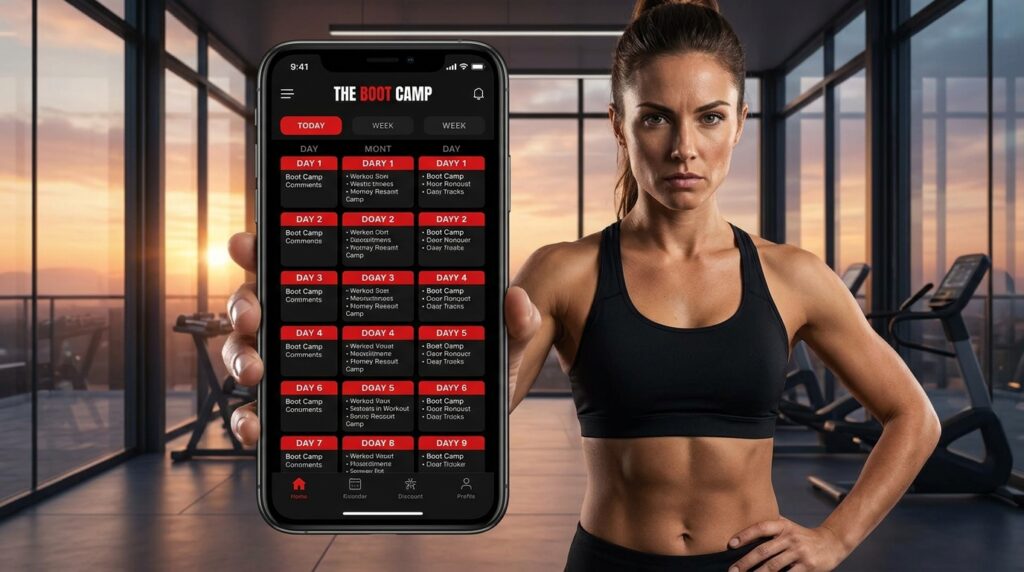
Its entire marketing strategy was based on pushing your limits. When I set up my profile, it proudly generated a grueling, six-day-a-week workout calendar. The interface was sleek, dark, and intimidating.
For the first week, the sheer intensity worked. I felt like an athlete. But the fatal flaw of this app was its absolute lack of flexibility. It operated on a strict pass/fail system.
If my schedule got crazy on a Wednesday and I couldn’t complete the assigned 45-minute HIIT session, the app didn’t offer to reschedule it. Instead, my calendar turned red. The streak was broken. The app sent me a push notification that felt like a digital slap on the wrist, reminding me that “champions don’t take days off.”
Life is entirely unpredictable. You get sick, you have to stay late at work, or you simply sleep poorly. By week three, I had missed two sessions due to a heavy workload. Looking at the red marks on my digital calendar made me feel like a complete failure.
Once the illusion of a “perfect streak” was broken, my motivation plummeted to zero. I abandoned the app before the month was even over. I learned very quickly that perfectionism is the absolute enemy of consistency.
App #2: The Data Dashboard
For my second month, I swung to the opposite end of the spectrum. I downloaded an app designed for data nerds.
This application didn’t yell at me or demand six days of intense cardio. Instead, it tracked absolutely everything. It synced with my smartwatch, my digital scale, and my nutrition tracker. It presented me with daily graphs of my heart rate variability, my sleep cycles, my caloric deficit, and my step count.
Initially, I loved this. I am a highly analytical person, and seeing my biological data laid out in colorful charts gave me a false sense of control.
However, within two weeks, working out became a part-time job. The friction required to use the app was astronomical. If I wanted to lift weights, I had to manually input the name of the exercise, the weight of the dumbbell, the number of reps, and the exact seconds of my rest period. If I forgot to tap “stop” on my rest timer, my entire data set for the day was skewed.
I spent more time staring at my phone screen entering numbers than I did actually lifting weights. It completely stripped the joy out of physical movement.
If you are someone who easily falls into the trap of analyzing every single calorie and heartbeat, I strongly suggest stepping back and reviewing some Tips for Tracking Your Fitness Without Feeling Overwhelmed. Tracking should serve your workout, not become the workout itself. The moment the data becomes a source of anxiety, the app is failing you.
App #3: The Gamified Distraction
By month three, I was exhausted. I needed something fun, so I opted for a highly gamified fitness app.
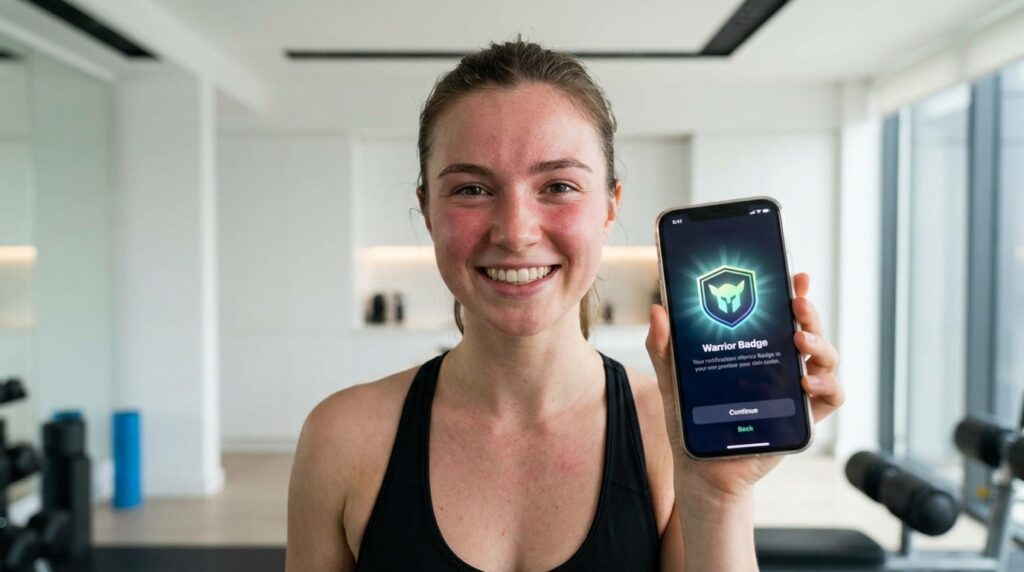
This platform treated exercise like a role-playing video game. Every time you logged a workout, your digital avatar gained “experience points.” If you ran three miles, you unlocked a virtual gold medal. If you worked out for five consecutive days, digital confetti exploded on your screen.
I will admit, the gamification was highly effective for the first ten days. I genuinely wanted to unlock the “Warrior Badge” for completing a difficult core routine. The dopamine hits were immediate and satisfying.
But dopamine is a fickle chemical. It requires increasingly larger doses to achieve the same effect.
Eventually, a digital badge wasn’t enough to convince me to put on my running shoes when it was raining outside. The virtual rewards felt disconnected from my physical reality. My avatar was leveling up, but my knees still hurt and I was still out of breath walking up a steep flight of stairs.
I realized that external motivation—like badges, points, and confetti—has a very short shelf life. If the app doesn’t help you find an internal reason to exercise, you will inevitably quit the moment the game gets boring.
App #4: The Generic Video Library
For my fourth attempt, I decided to simplify. I subscribed to a premium app that was essentially just a massive library of follow-along workout videos led by incredibly attractive, fitness influencers.
The production value was stunning. The music was great, the lighting was perfect, and the instructors were endlessly enthusiastic.
But it suffered from the “Netflix scroll” problem.
Every afternoon, I would open the app and be confronted with hundreds of choices. Should I do a 20-minute pilates flow? A 30-minute kettlebell circuit? A 15-minute kickboxing routine?
Because there was no structured plan, I suffered from intense decision fatigue. I would spend fifteen minutes just trying to pick a video. Furthermore, because there was no intelligent progression, I wasn’t actually getting stronger. I was just blindly following random videos without any overarching strategy.
It was during this month that I started digging into the settings of the platform, desperately trying to find a way to structure the chaos. This led me to research the Hidden Features in Fitness Apps I Wish I Knew Earlier, hoping to find a hidden scheduling tool. But the reality was, a giant library of content is useless if you don’t know what you are supposed to do with it on a Tuesday at 6:00 PM.
App #5: The Winner (The Adaptable Coach)
I entered month five feeling incredibly cynical. I was convinced that technology simply couldn’t solve my fitness problem. But I had committed to the experiment, so I downloaded the final app on my list. (Think of apps that function like Fitbod or strong algorithmic personal trainers).
The onboarding process was entirely different from the others.
Instead of asking me how much weight I wanted to lose in thirty days, it asked me highly practical questions. “What equipment do you have access to right now?” “How much time do you realistically have to work out today?” “Which muscles are currently sore from your last workout?”
It didn’t give me a rigid 30-day calendar. It didn’t bombard me with complex data. It simply generated one single workout, perfectly tailored to my exact situation on that specific day.
This feature—auto-regulation—was the holy grail I had been searching for.
The Magic of Listening to Your Body
Let me explain why auto-regulation completely changed my life.
With previous apps, if I woke up with a stiff lower back, I was faced with a terrible choice. I could either push through the pain to complete the assigned “Heavy Deadlift Day” and risk injury, or I could skip the workout entirely and feel like a failure.
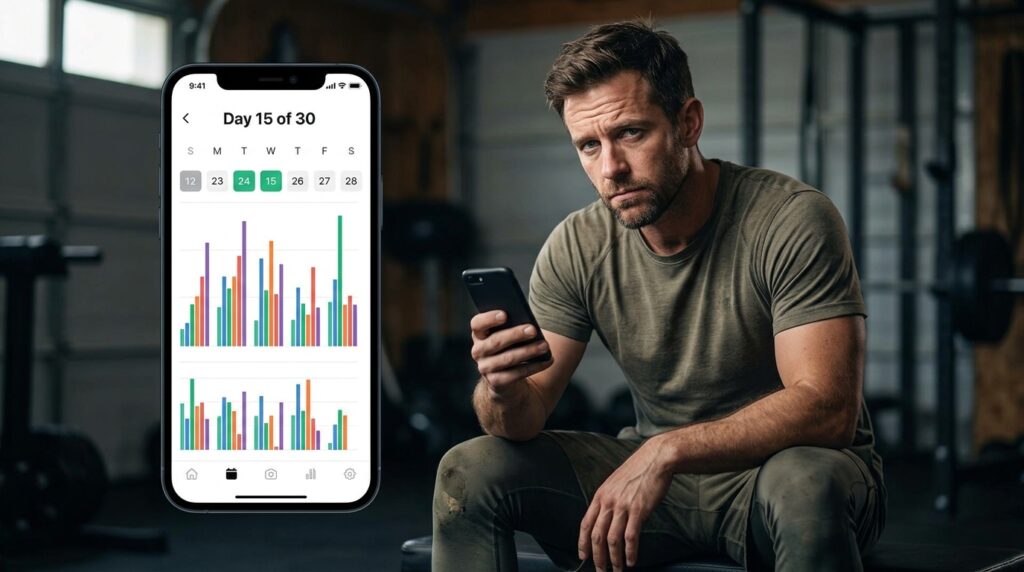
With this new app, I simply opened the “Recovery” tab. I tapped on the digital anatomy model and selected my lower back, indicating that it was highly fatigued.
Instantly, the app’s algorithm recalculated my workout for the day. It removed the heavy deadlifts and replaced them with gentle hamstring stretches and upper-body mobility work. It allowed me to stay consistent and keep my habit alive without punishing my body.
It met me exactly where I was.
Eliminating the Friction
The interface was brilliant in its simplicity. When I stepped into my living room, I told the app I only had 30 minutes and a pair of 10-pound dumbbells.
It didn’t show me a video of a fitness model doing complex gymnastics. It just gave me a clean, easy-to-read list of three exercises. It told me exactly how many reps to do. It managed my rest timers automatically in the background.
I didn’t have to think. I just had to execute.
By removing the decision fatigue and the complex data entry, the app eliminated all the friction between “wanting to work out” and “actually working out.” If you are struggling to build a sustainable routine, you have to prioritize systems that remove choices. I’ve written extensively about this philosophy in my guide on How to Track Your Fitness Goals With Apps That Work, and this specific application was the ultimate real-world proof of that concept.
Progressive Overload Made Invisible
The most impressive part, however, was what the app was doing silently in the background.
In order to actually get stronger, you have to gradually increase the difficulty of your workouts over time. This is called progressive overload. Doing it manually requires carrying around a notebook and constantly doing math to figure out if you should add two pounds to your dumbbell press this week.
This app handled the math for me.
Every time I logged a workout, it remembered my performance. Two weeks later, when it assigned me that same exercise, it quietly added one extra repetition or a tiny bit more weight to the suggestion. I didn’t even notice it was happening until a month had passed, and I realized I was casually lifting weights that would have crushed me thirty days prior.
It engineered my success without requiring me to become a sports scientist.
Why the Right Software Matters
I am happy to report that the graveyard of activewear in my bottom dresser drawer is finally empty. I actually use the resistance bands now.
It has been six months since I started using the adaptable coaching app, and I haven’t missed a week. I don’t work out six days a week, and I am certainly not waking up at 5:00 AM. I work out three times a week, for thirty minutes, whenever I can fit it in.
This experiment taught me a profound lesson about human behavior.
When we fail to build a good habit, we instinctively blame our own character. We call ourselves lazy or unmotivated. But more often than not, we are simply using the wrong tools.
If you try to chop down a massive oak tree with a butter knife, you are going to give up, exhausted and frustrated. It doesn’t mean you are weak; it means you need an axe.
For years, I was using apps that demanded perfection, overloaded me with data, or relied on cheap digital confetti. I was setting myself up for failure. Finding an application that actually listened to my body, adapted to my chaotic schedule, and removed the mental friction of planning was the axe I needed.
If you are stuck in that endless cycle of starting and stopping, please stop beating yourself up. Delete the apps that make your calendar turn red when you miss a day. Delete the apps that make you feel guilty.
Look for a tool that is flexible, intelligent, and forgiving. Fitness shouldn’t feel like a punishment for what you ate yesterday; it should be a quiet, consistent investment in your future self. Once you find the right software to guide you, you will be amazed at how quickly the “chore” of exercising turns into the best part of your day.
