
I used to have a terrible, almost reflexive habit when my stress levels peaked.
Whenever I felt completely overwhelmed—whether I was stuck in bumper-to-bumper traffic on Avenida Brasil, staring at a looming deadline at work, or dealing with a sudden wave of personal anxiety—my hand would instinctively reach into my pocket for my smartphone.
I wasn’t looking for a solution. I was looking for an escape. I would open social media, doomscroll through negative news, or blindly tap through stories of people living seemingly perfect lives. I thought I was “turning my brain off” for a few minutes. In reality, I was throwing gasoline on a fire.
By the time I put the phone down, my chest would feel even tighter, my breathing shallower, and the original stress was now compounded by digital exhaustion. My smartphone felt like a toxic little box that was actively destroying my mental health.
Then, a therapist told me something that completely shifted my perspective: The phone is just a piece of glass and metal. It has no intent. The stress isn’t coming from the hardware; it’s coming from the software you choose to open.
If my phone had the power to trigger a fight-or-flight response, it absolutely had the power to trigger my parasympathetic nervous system—the “rest and digest” mode. I just had to stop using it as an escape hatch and start using it as an anchor.
Today, that exact same device is the most powerful mental health tool I own. If you are exhausted, burned out, and tired of your screen adding to your anxiety, here is a comprehensive guide on how to actually use mindfulness apps to reduce your stress, step by step.
Step 1: Breaking the “Monk on a Mountain” Stereotype
The biggest barrier to using mindfulness apps is the fundamental misunderstanding of what meditation actually is.
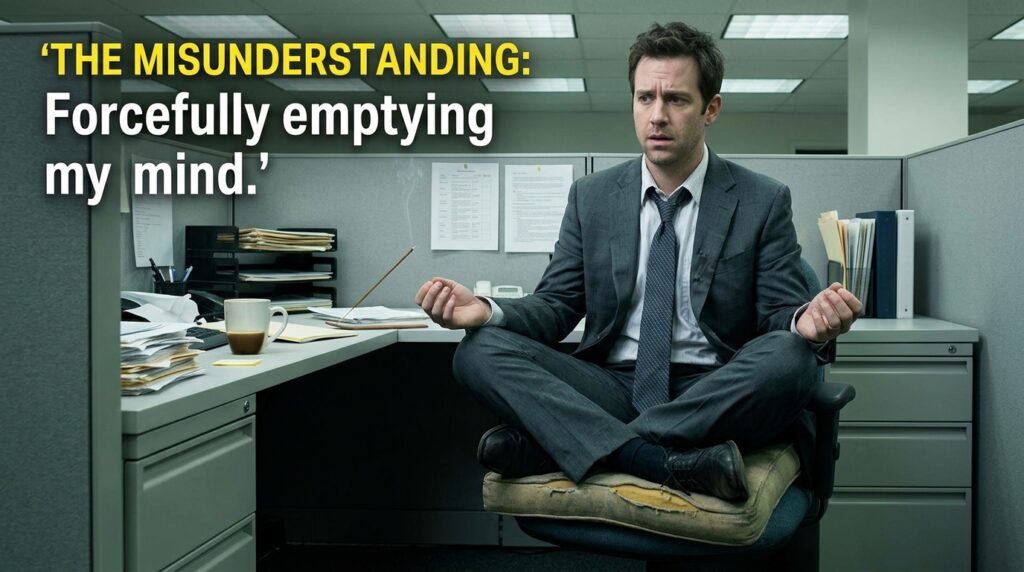
When I first downloaded a meditation app, I thought I was supposed to sit cross-legged on a cushion, burn incense, and forcefully empty my mind of all thoughts for an hour. When my mind inevitably wandered to what I was going to eat for dinner, or how much my back hurt, I got incredibly frustrated. I thought I was “failing” at meditating, which ironically caused me more stress.
Mindfulness apps are brilliant because they immediately shatter this stereotype.
They teach you that mindfulness isn’t about stopping your thoughts; it is about noticing your thoughts without letting them hijack you. The app acts as a gentle set of training wheels. When the guided voice tells you to focus on your breath, and your mind inevitably wanders, the voice comes back thirty seconds later to remind you: “It’s okay that your mind wandered. Just notice it, and gently bring it back.”
You don’t need a mountain retreat. You can meditate sitting in your parked car before walking into a stressful meeting. You can do it sitting on the edge of your bed, or even hiding in a bathroom stall for three minutes. The app makes the practice aggressively practical for the chaotic, modern world.
Step 2: Utilizing the “Emergency SOS” Protocol
There is a big difference between chronic, low-grade daily stress and a sudden, acute spike of panic.
When your boss sends you a terrifying email with the subject line “We need to talk,” your body physically reacts. Your heart rate spikes, your vision narrows, and you take short, shallow breaths. In that specific moment, a 20-minute lecture on the philosophy of letting go is useless. You need an emergency brake.
The best mindfulness apps on the market understand this biological reality. They feature “SOS” or “Panic” buttons front and center on their dashboards.
When I feel a sudden wave of panic, I open my app and click the 3-minute SOS breathing exercise. I don’t even have to close my eyes. The screen displays a beautifully smooth, expanding and contracting circle. It tells me to inhale as the circle expands, hold, and exhale as the circle shrinks.
This is not spiritual mumbo-jumbo; this is pure biology. By forcing you to match your breath to the visual metronome on the screen, the app physically slows your heart rate. It sends a mechanical signal to your vagus nerve, which in turn tells your brain, “We are not being chased by a tiger right now. You can stand down.” In three minutes, the app can pull you out of a full-blown panic response and back into rational thought.
Step 3: Finding Your Perfect Digital Guide
Not all stress is created equal, and not all meditation apps will work for your specific personality.
Some people love an app that is deeply spiritual and esoteric. Other people need an app that is clinical, rooted in neuroscience, and completely stripped of any “woo-woo” language. Furthermore, the voice of the guide matters immensely. If you find the narrator’s voice annoying or grating, you will never be able to relax.
I spent a significant amount of time testing different platforms, which I eventually cataloged and reviewed in my piece about (6 Meditation Apps That Helped Me Relax After Stressful Days). The key takeaway from that experiment was that you have to shop around.
Download three different apps using their free trials. Listen to a beginner session on each one. Does the interface make you feel calm, or is it cluttered and confusing? Does the teacher sound like a compassionate friend, or a robotic professor?
Once you find the app that actually clicks with your specific brain chemistry, the resistance to opening it completely vanishes.
Step 4: Building a “Micro-Habit” System
The most common reason people delete mindfulness apps is that they try to do too much, too fast. They decide they are going to meditate for thirty minutes every single morning. They do it for two days, miss the third day because they overslept, feel guilty, and abandon the app forever.
Mindfulness is a muscle. You would not walk into a gym on your first day and try to bench press 300 pounds. You start with the empty bar.
To use these apps effectively, you must embrace the concept of micro-habits.
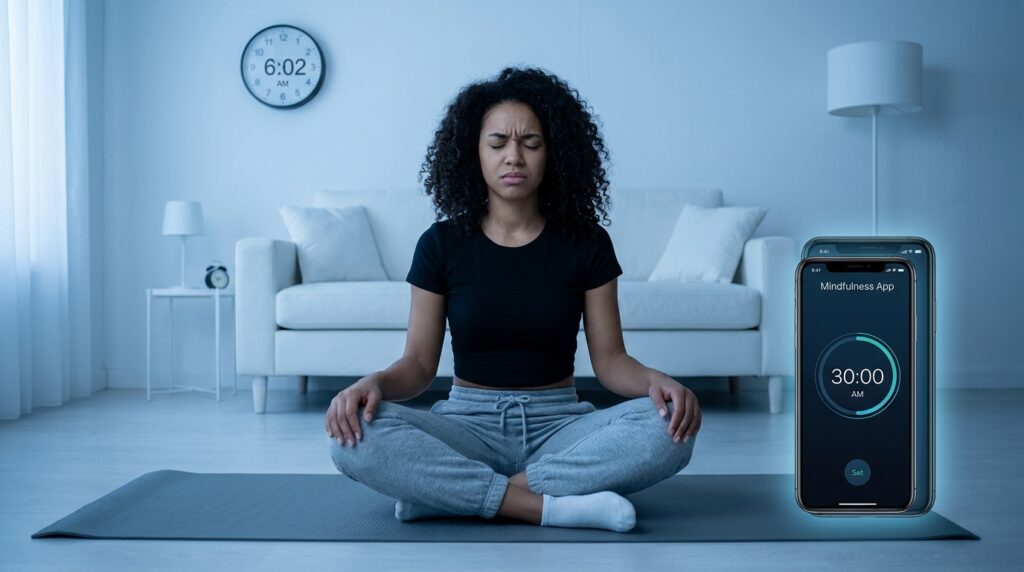
I started by setting my app to the absolute lowest possible duration: three minutes. That was it. I committed to sitting on my couch for just three minutes a day. It is practically impossible to find an excuse not to do three minutes.
To ensure I actually did it, I tied the app to an existing, unbreakable habit. I already drink a cup of coffee every single morning without fail. So, I made a rule: I am not allowed to take my first sip of coffee until I have completed my three-minute app session.
By anchoring the new digital habit to an old physical habit, it became automatic. Over the course of a few months, those three minutes naturally grew into five, and then into ten. But the foundation was built on embarrassing simplicity.
Step 5: Leveraging Background Soundscapes
We often think of mindfulness apps purely as guided meditation tools, but they are also incredibly powerful environmental controllers.
If you work in a chaotic open-plan office, or if you live in a noisy apartment building, your brain is constantly processing chaotic auditory inputs. Your subconscious is tracking the sirens, the phone calls, and the heavy footsteps upstairs, which keeps your baseline stress levels artificially high throughout the day.
Most premium mindfulness apps have extensive libraries of “Soundscapes” or “Focus Music.”
When I need to write a difficult report and my environment is stressing me out, I don’t use guided meditation. I plug in my noise-canceling headphones, open my mindfulness app, and select a lo-fi focus track or the sound of a heavy thunderstorm.
By replacing the unpredictable, stressful noise of my environment with a predictable, soothing digital soundscape, my brain stops scanning the room for threats. It allows me to drop into a state of deep, relaxed focus. Discovering how to manipulate my auditory environment was a game-changer, and it was one of the key revelations I wrote about when diving into the (Hidden Features in Meditation Apps That Improve Focus). The app doesn’t just have to speak to you; it can simply provide a barrier between you and a noisy world.
Step 6: The Sleep-Stress Connection
You cannot talk about reducing stress without talking about sleep. They are intimately, biologically linked in a vicious cycle.
When you are stressed out during the day, your brain pumps out cortisol. That cortisol makes it impossible to fall asleep at night. Because you don’t sleep well, your nervous system is fragile the next day, making you even more susceptible to stress.
If you are lying in bed at 1:00 AM, staring at the ceiling, replaying an argument you had three years ago, or worrying about a bill due next week, traditional meditation can sometimes backfire. Focusing on your breath in a dark, quiet room can sometimes just give your anxiety a megaphone.
This is where “Sleep Stories” or “Sleep Meditations” come in.
These features are specifically designed to gently distract your conscious mind so your body can take over and fall asleep. They involve a narrator with a deeply soothing voice describing a slow, beautiful, incredibly boring scenario—like a train ride through the snowy Swiss Alps, or a walk through a botanical garden.
The story requires just enough attention to stop you from ruminating on your own stressful thoughts, but it is boring enough that it won’t keep you awake. The first time I tried one, I was deeply skeptical, but it completely rewired my nighttime routine, an experience I documented thoroughly in (The Meditation App I Didn’t Expect to Love So Much). By using the app to forcibly break the cycle of midnight anxiety, you wake up the next morning with a biological armor against daily stress.
Step 7: Transitioning from the App to Real Life
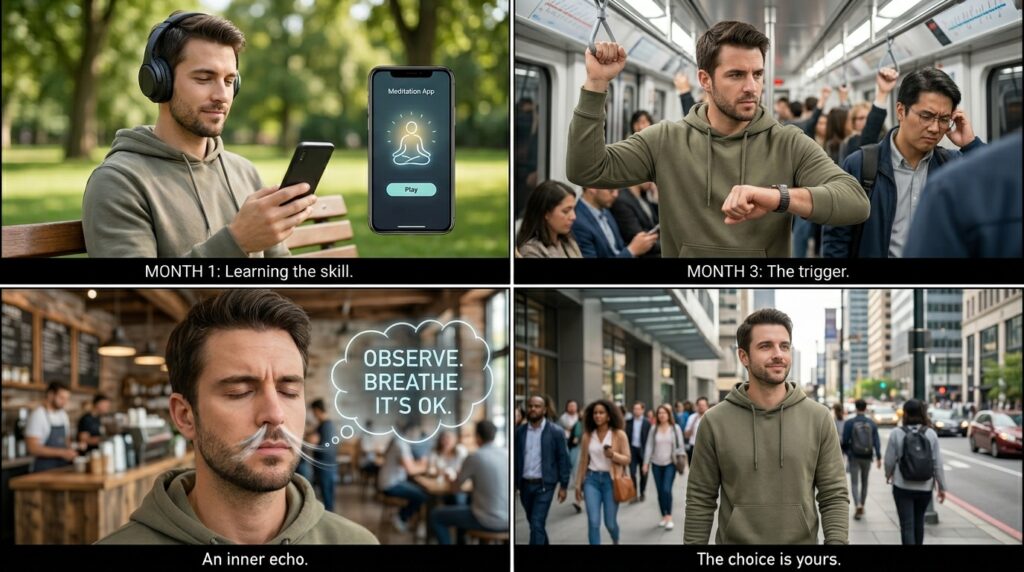
The ultimate goal of a mindfulness app is not to keep you chained to your phone forever. The goal is to teach you skills on the screen that you can eventually use off the screen.
After a few months of consistent app usage, you will start to notice something profoundly strange happening in your daily life.
You will be standing in a long line at the grocery store. The person in front of you will be arguing with the cashier. Normally, you would feel your blood pressure rising. You would sigh aggressively, check your watch, and feel a surge of frustration.
But suddenly, without opening your phone, you will hear the echo of the app’s narrator in the back of your head. You will notice the physical sensation of anger bubbling up in your chest. Instead of reacting to it, you will just observe it. You will take a deep, intentional breath.
The anger won’t entirely disappear, but it will lose its grip on you. You will realize that you have a choice in how you respond to the chaos around you.
Final Thoughts on Reclaiming Your Peace
We live in an era of unprecedented stimulation. Human brains were simply not evolved to process the sheer volume of emails, breaking news alerts, financial pressures, and social obligations that we deal with every single day.
It is completely normal to feel stressed. It is not a sign of weakness; it is a sign that your nervous system is overwhelmed by the modern world.
But you do not have to be a passive victim to that overwhelm.
Your smartphone is a tool. You can use it as a weapon against your own mental health, letting it blast you with anxiety-inducing notifications from the moment you wake up. Or, you can use it as a shield.
By intentionally choosing to open a mindfulness app instead of a social media feed, you are taking a radical step toward self-preservation. You are telling your nervous system that you are in control.
Don’t wait until you are having a terrible day to start. Download an app tonight. Find a quiet corner of your living room, put your headphones in, and commit to just three minutes. Close your eyes, listen to the guide, and take a deep breath.
The chaos of the world will still be there when you open your eyes, but you will finally have the tools to navigate it without losing your mind.
